Guises
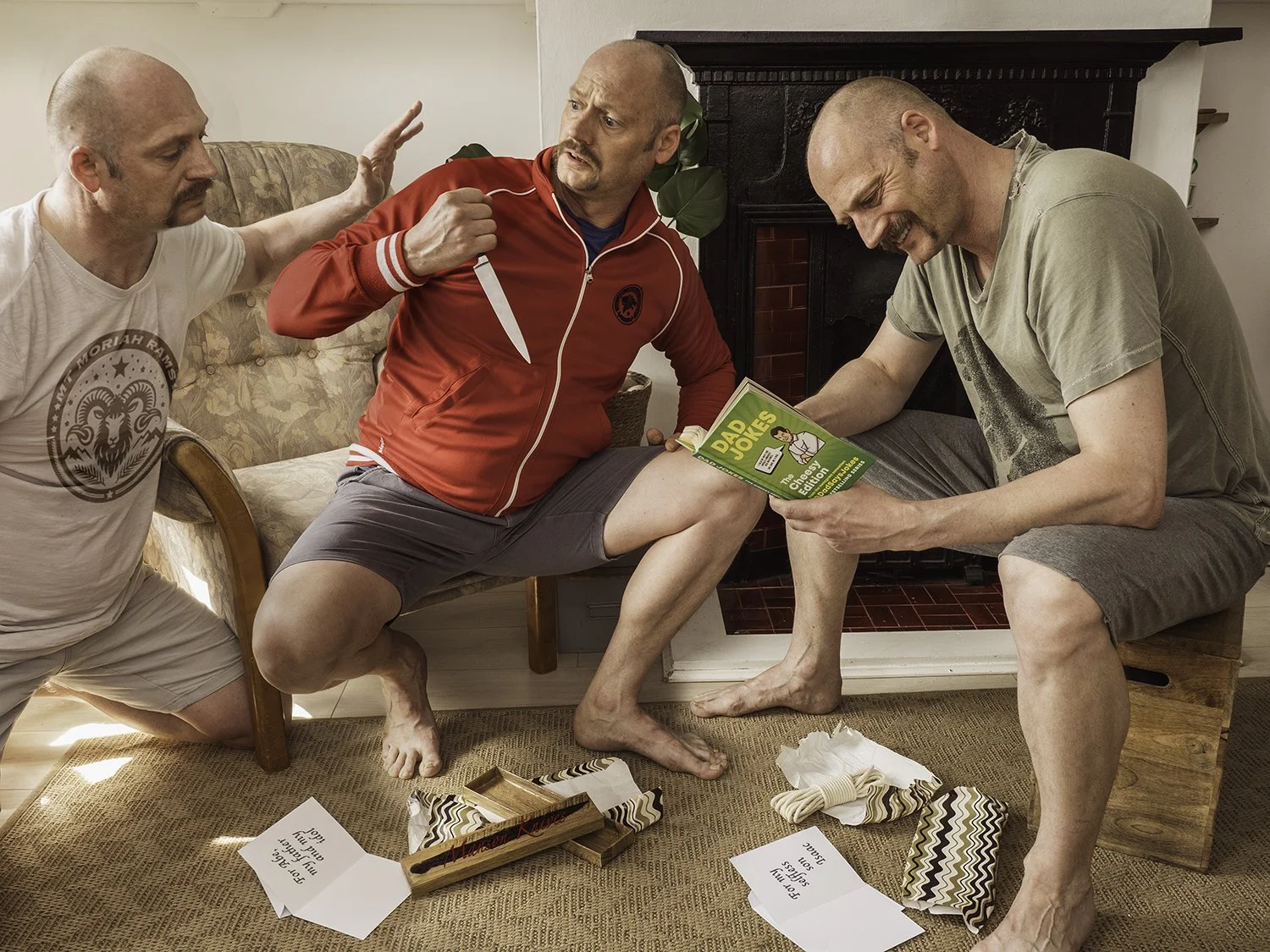
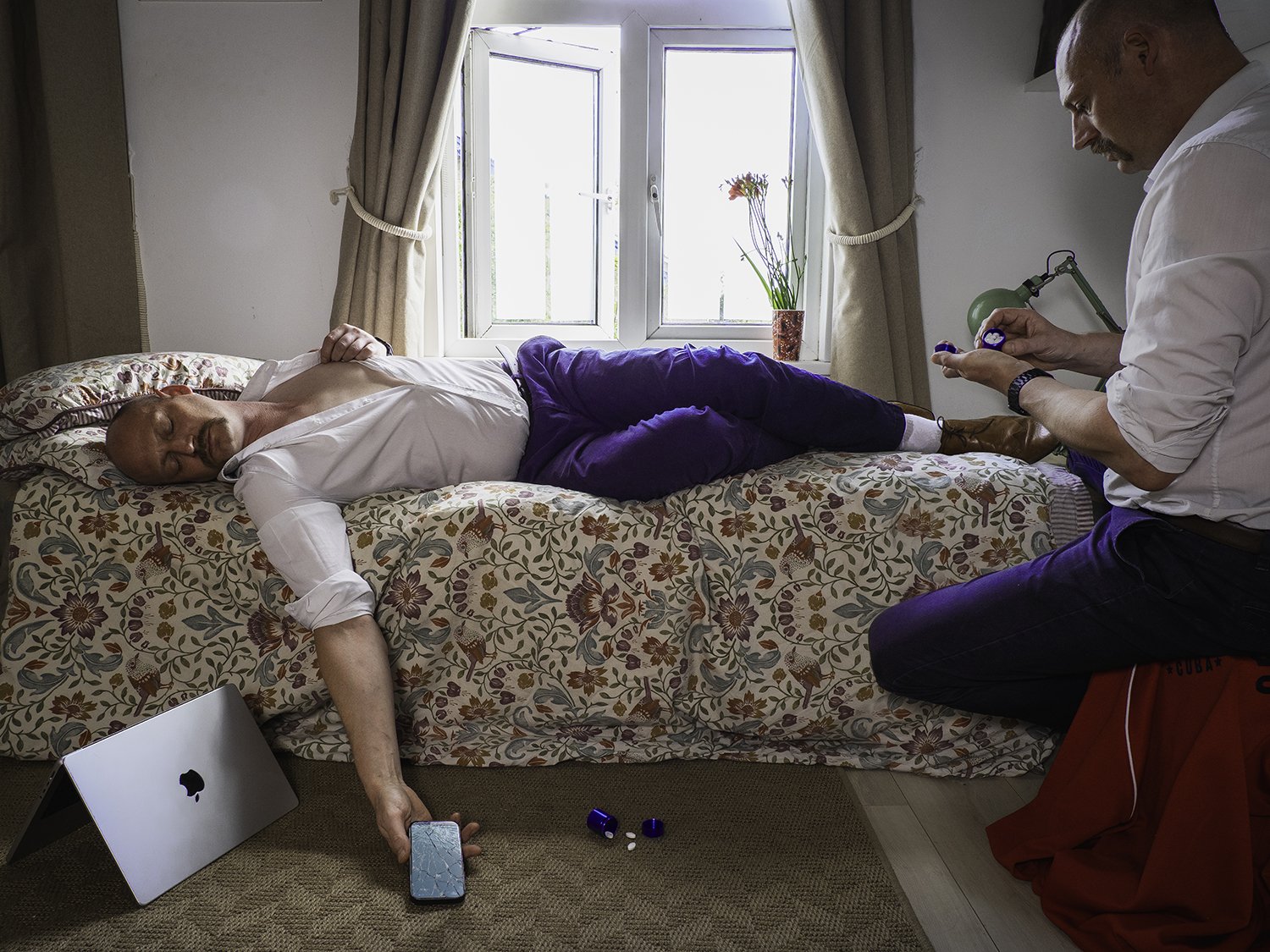
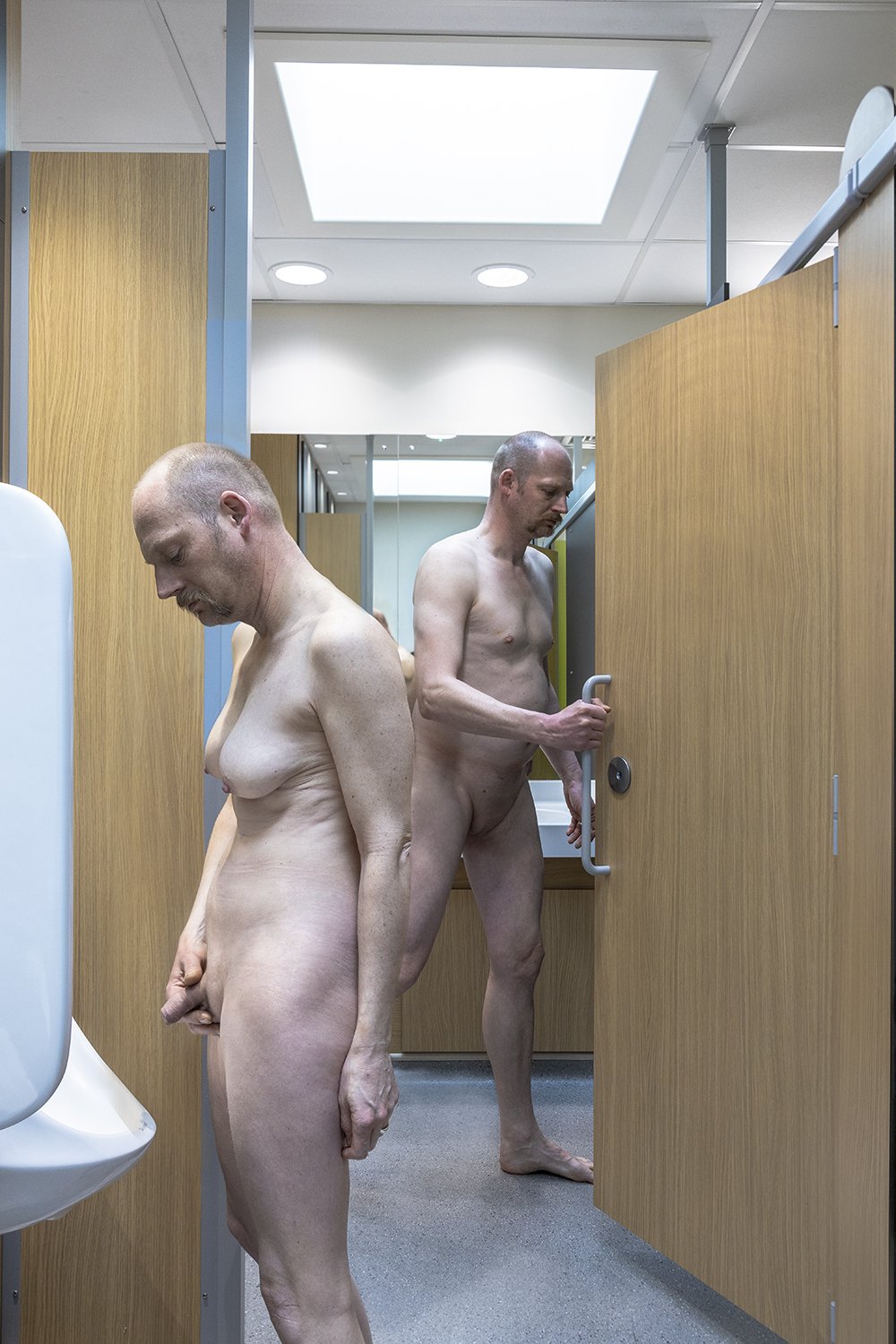
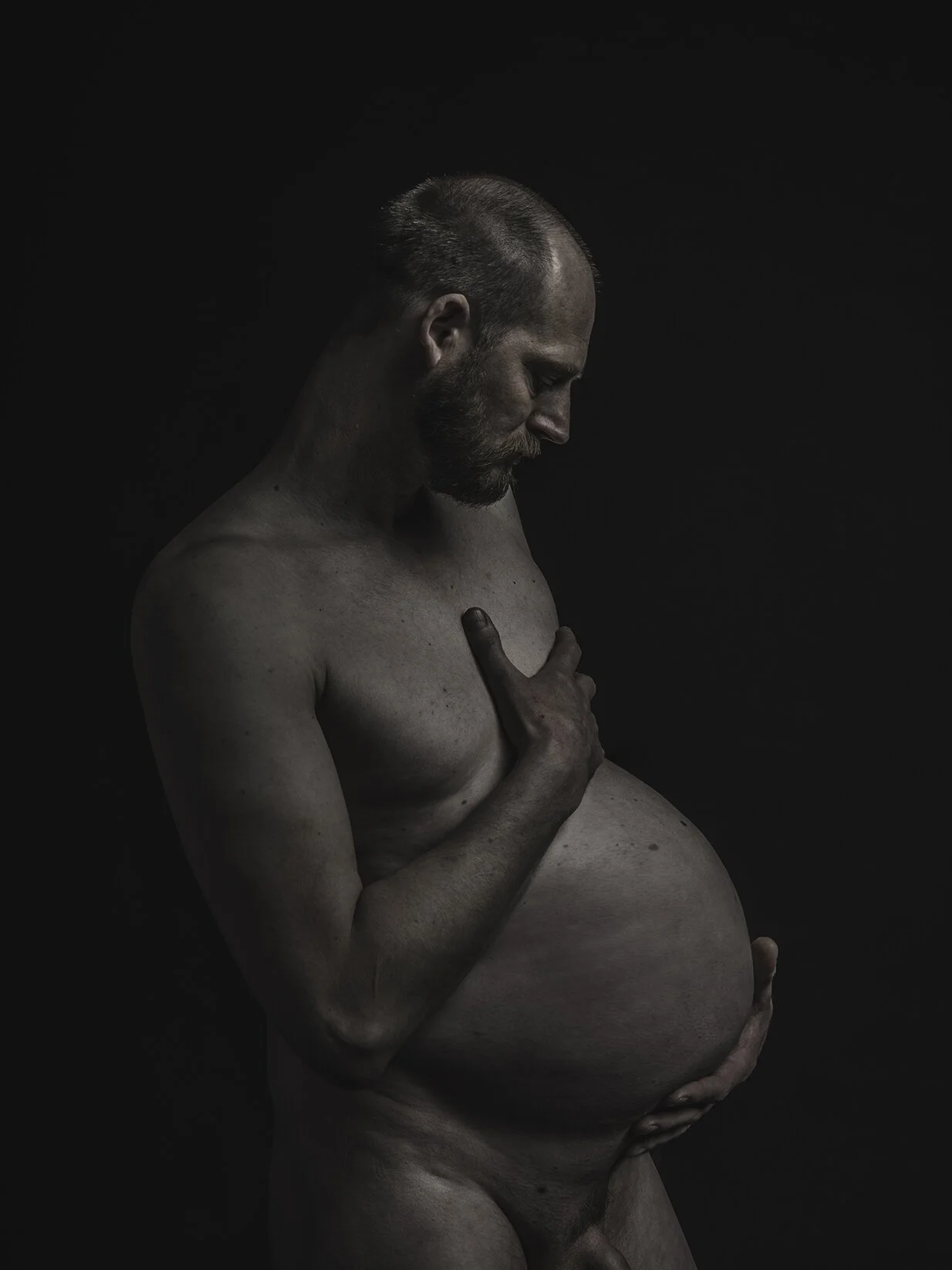
The Guises body of work uses staged and digitally constructed self-portraiture to examine what happens to men when the cultural scripts of masculinity prove inadequate — when they cannot be maintained, or when conforming to them comes at too high a personal cost.
Where the earlier Disguises work interrogated the machinery through which gendered identities are constructed and imposed, Guises turns attention to the consequences of that machinery: the psychological, social and in some cases fatal cost of scripts that leave insufficient room for the men inside them. The two bodies of work are not parallel but continuous — a development from exposing the artifice of gender's construction outward, to examining its human cost from within.
The method is autoethnographic. By placing himself within the work — physically, psychologically, at genuine personal risk — the artist enacts the argument rather than simply illustrating it. The presence in the images is not incidental. You cannot interrogate the prohibition on male vulnerability from a safe critical distance.
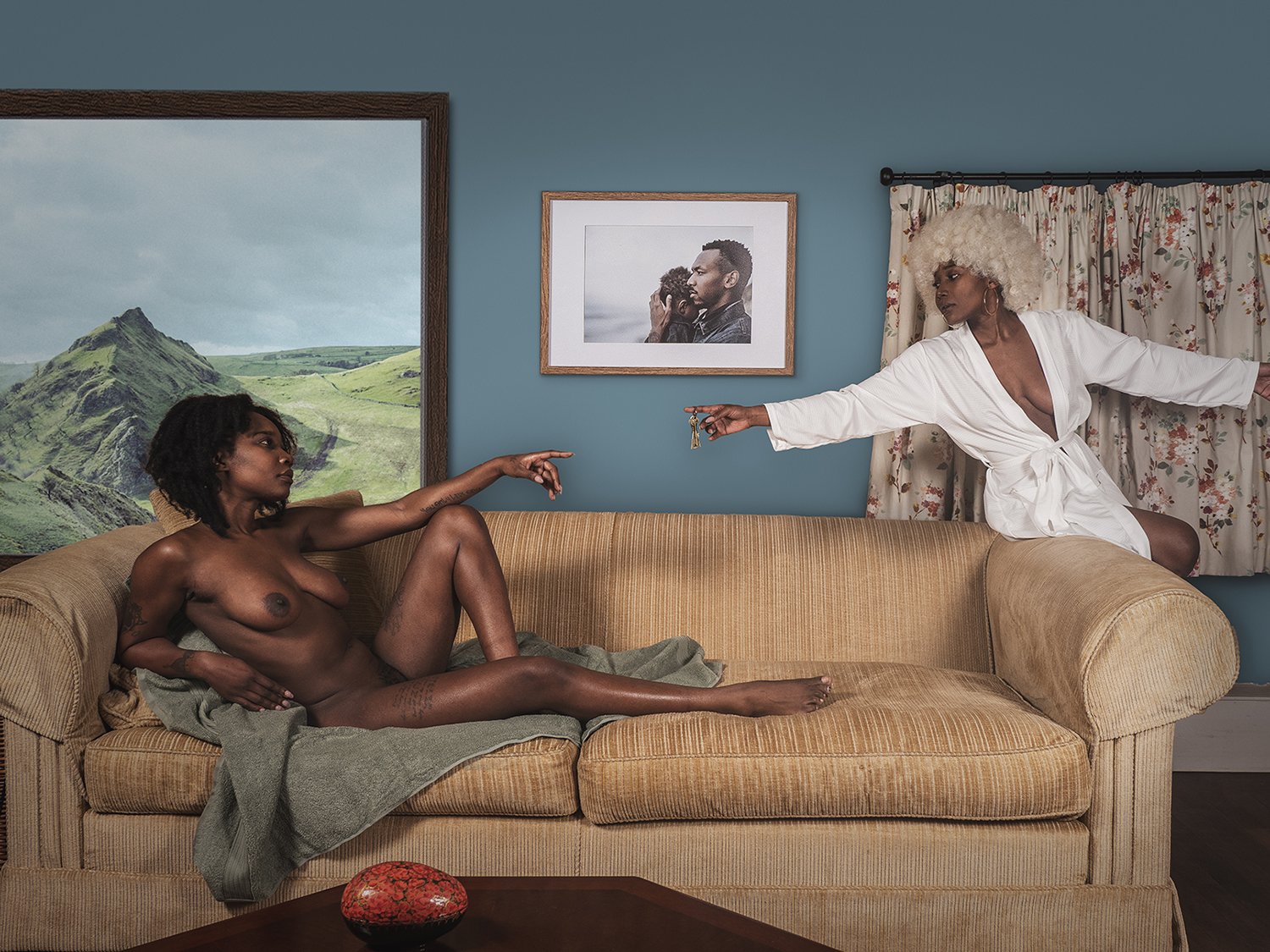
Working through mythology, religious iconography, art history and the quieter registers of everyday domestic life, the series that make up Guises reach toward something the cultural conversation about masculinity has been slow to address honestly: that the masks men are required to wear have costs, and that making those costs visible is not an attack on men but an act of solidarity with them.
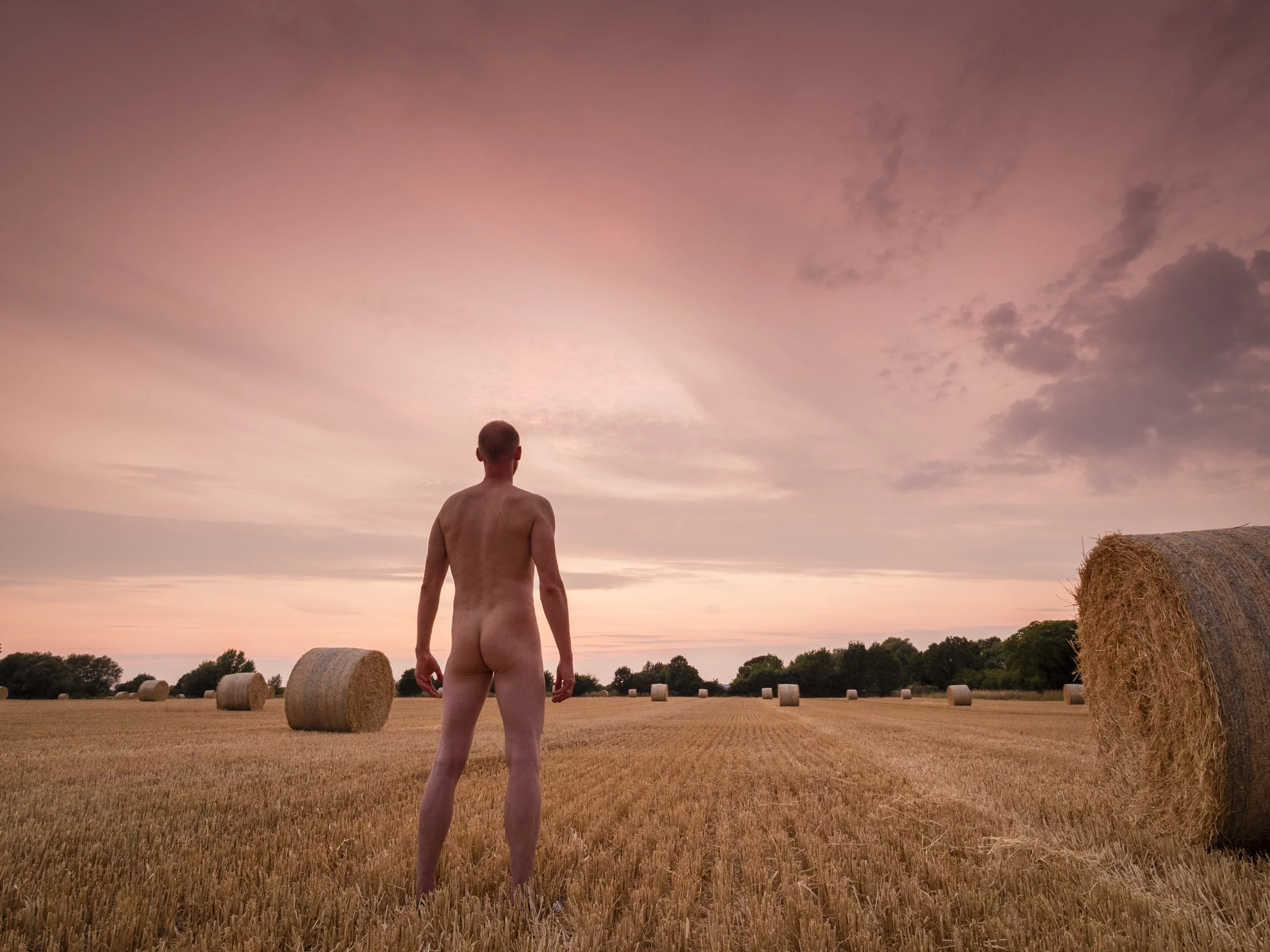
The series are arranged in order of development, from Reorientation — the autoethnographic precursor made in real British landscapes during a period of significant personal upheaval — through Man Made, The Emperor's Chambers, One Too Many Men, and Heresy.