
One Too Many Men
One Too Many Men is a series of staged and digitally constructed self-portraits addressing the persistent crisis of male suicide — and the broader, quieter crisis of masculine identity that underlies it.
The title carries three meanings simultaneously. Even one male death by suicide is one too many. Many men carry a felt sense of being surplus — without value, unwanted, unneeded. And in each image there are two figures: one the victim, one the perpetrator or facilitator. The destroyer in every case is not another person. It is the construction itself — the guise of masculinity that proved too rigid to live inside.
This series was made from inside the experience it depicts. Male suicide rates remain roughly double those of women: a disparity that reflects not greater suffering but greater silence. The five images address different registers of that silence — from the ritualised shame of The Fallen, through the paralysing inwardness of The (Over)Thinker, the aestheticisation of male suffering in The Romantic, and the unheard distress signal of The Distant, to the quiet, rational indifference of The Indifferent — a man who has not yet made a dramatic crisis of things, but who has quietly stopped finding a reason to extend his life. Each image draws on a specific cultural reference: a ritual, a sculpture, a painting, a poem, a philosophical position. Each reference was chosen because western culture has already given it a name — and given the experience it encodes, in men, no name at all.
This series is one part of a larger and unfinished conversation about gender — the part that is least often examined and most often fatal.
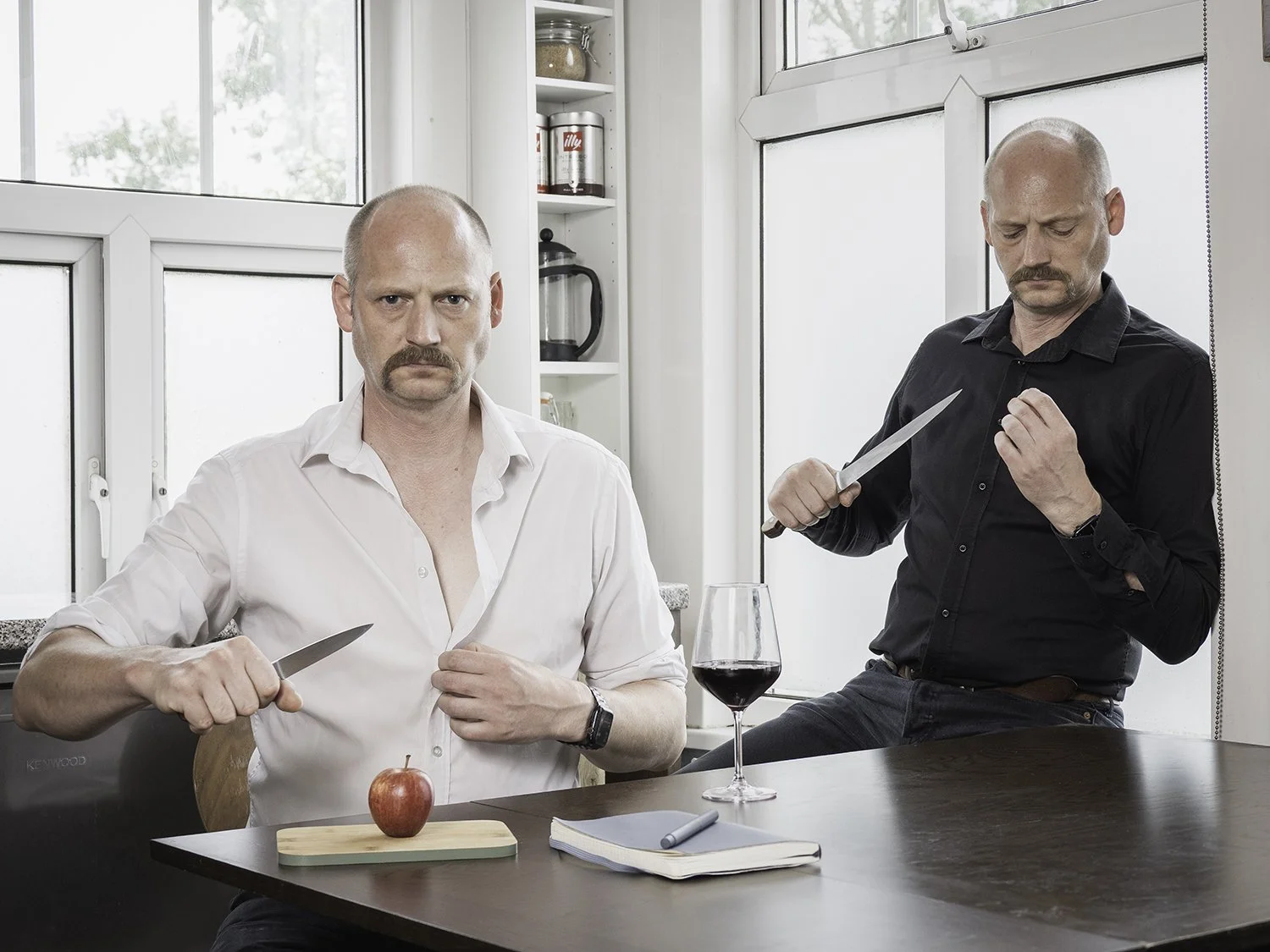
The Fallen
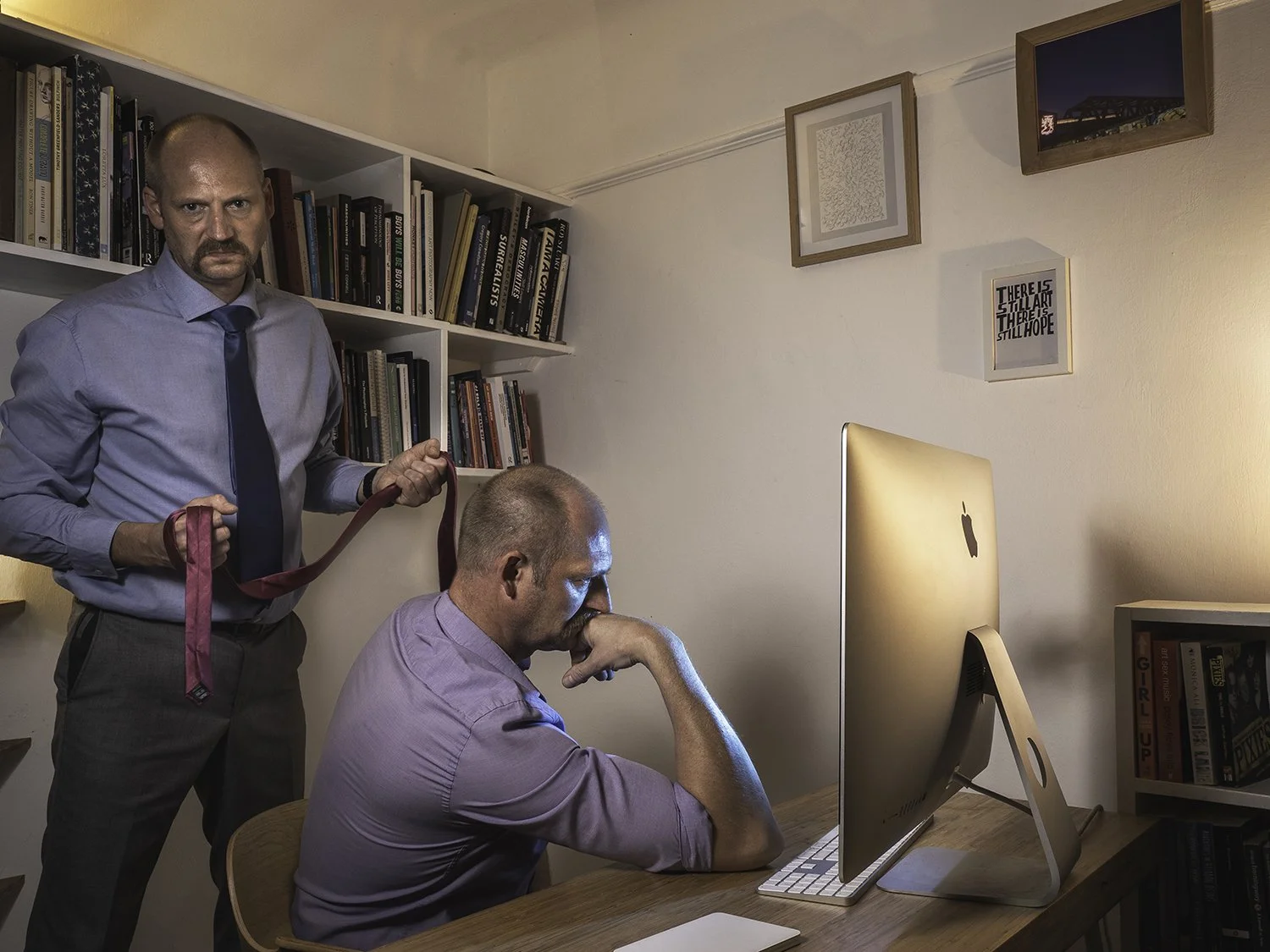
The (Over)Thinker
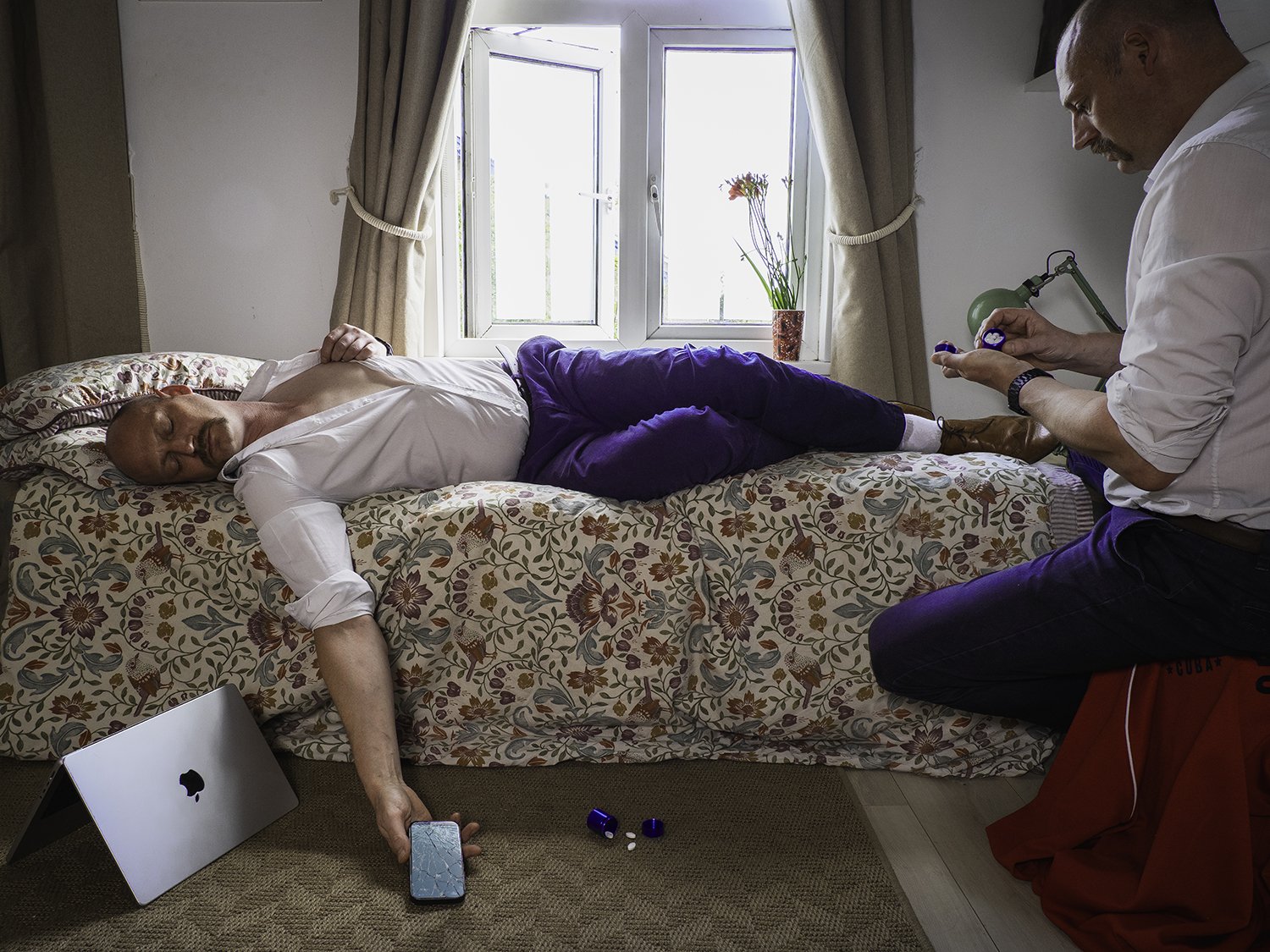
The Romantic
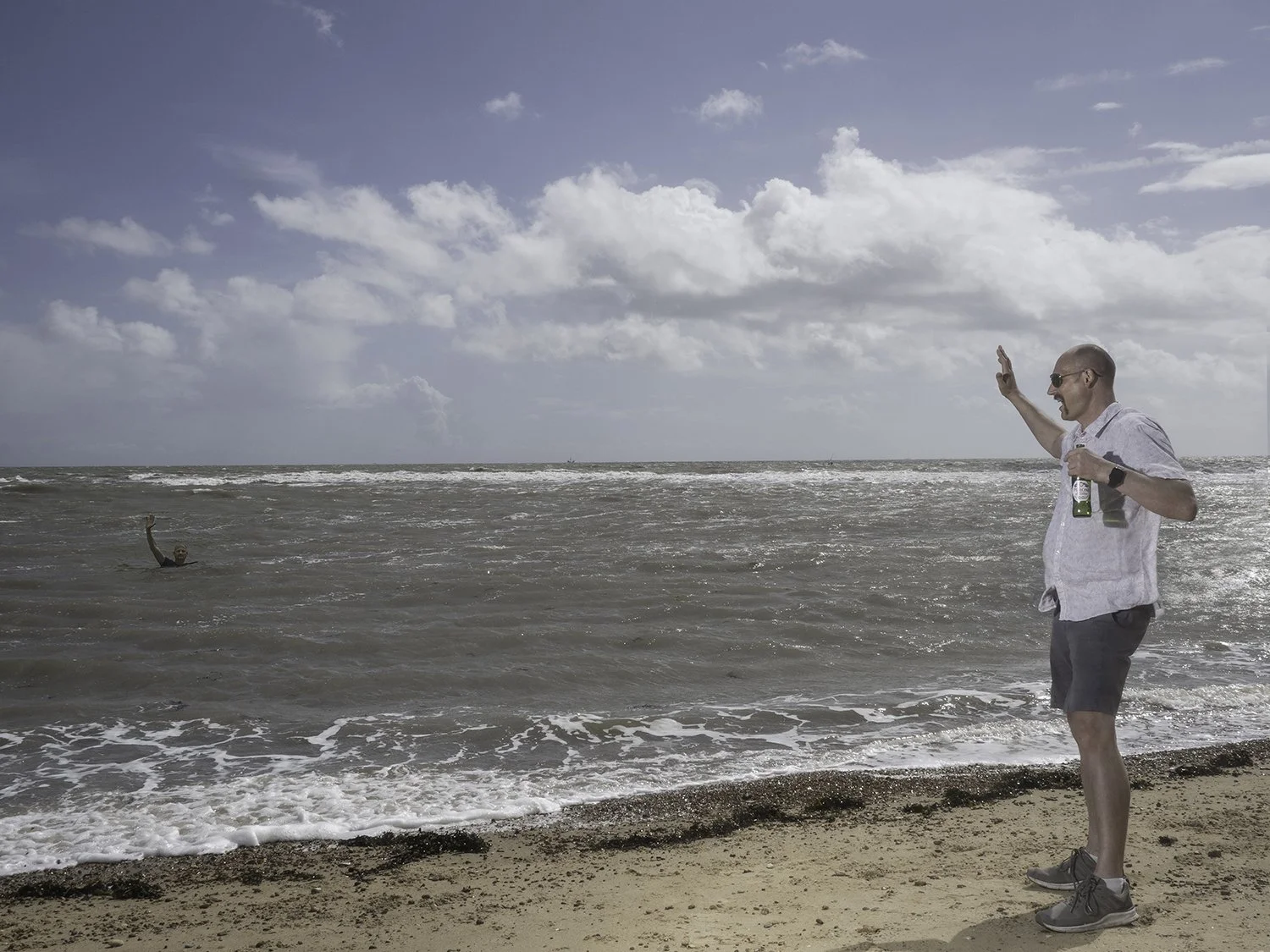
The Distant
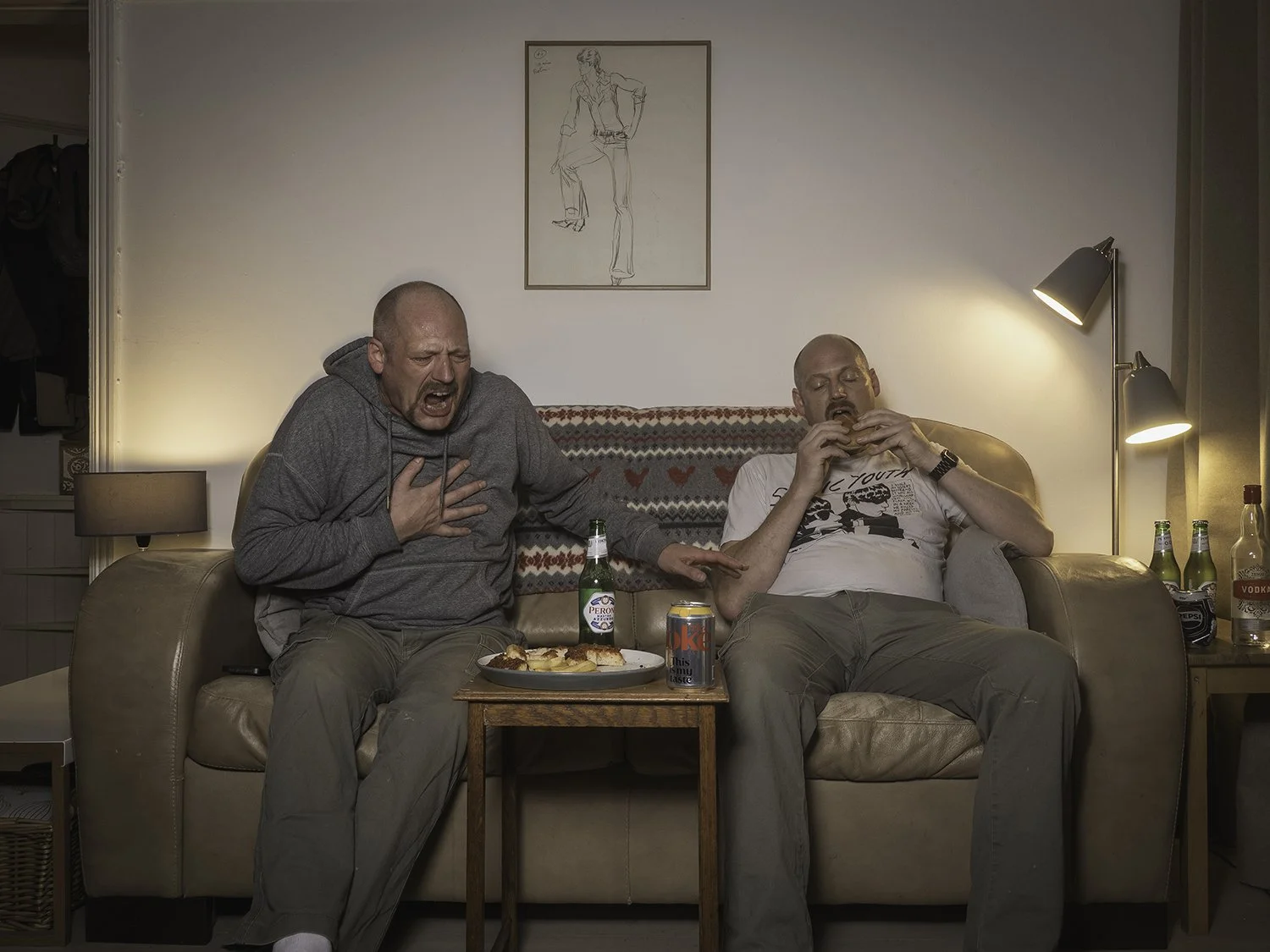
The Indifferent
References
-
Seppuku — a ritualised act historically associated with honour, atonement, and the avoidance of shame.
-
The Thinker by Auguste Rodin — often read as a symbol of contemplation, introspection, and the weight of thought.
-
The Death of Chatterton by Henry Wallis — a work that has come to embody the idea of artistic sensitivity, struggle, and the romanticisation of early death.
-
Not Waving but Drowning by Stevie Smith — a reflection on how distress can be overlooked or misunderstood, mistaken for ease or play.
-
Existential nihilism — a philosophical position associated with the absence of inherent meaning, often linked to detachment or indifference.
-
A short AI avatar video “Jack of Hearts” created for your viewing pleasure.
Why the Jack, and not the King?
The King would be too powerful. Much of my work is concerned with restricted agency — the gap between the roles culture assigns us and the more complicated, more fragile realities of who we actually are. The Jack has voice and presence. He is not invisible, not merely a number in the pack. But he operates within structures that define and constrain him, and is fully aware of this.
Hearts seemed the only possible suit. This work — however difficult its subject matter, however uncomfortable its images — is driven by love of life and by a genuine belief that things can be better. That men can be better understood, by others and by themselves. That the conversation about what masculinity costs — the one that isn't happening loudly enough — is worth having.
And the Jack is a face card. He shows one face to the world while carrying others. Like the doubled and multiplied selves that appear throughout my work — the same man, repeated, inverted, at odds with himself — the Jack acknowledges the complexity of human nature. The folly and the failures alongside the generosity and the humility. The performance and the person behind it.
The interview you are about to watch is conducted with and by that Jack. The interviewer and the subject are the same man. Whether either of them is wholly representing truth is, as always, a matter for the viewer to decide.
This is a first iteration. The conversation continues.