Disguises
The Disguises body of work interrogates the cultural machinery through which gendered identities — and in particular commodified femininity — are constructed, circulated, and consumed. Made during a period when a retrogressive mass media seemed to be thriving on the objectification of women's bodies and the lowest common denominator characterisation of men, the work set out to reveal that machinery for what it is: not nature, not desire in its raw form, but a visual economy with rules, conventions, and vested interests.
The method throughout is staged and digitally constructed composite photography — images that appear convincingly real while remaining deliberately artificial. This tension is not decorative. The carefully assembled artifice of the images mirrors the carefully assembled artifice of the representations they examine: the idealised body, the posed desire, the borrowed iconography of Old Masters and pornography alike. The work does not claim to stand outside the structures it examines. It stands inside them and asks what they are made of.
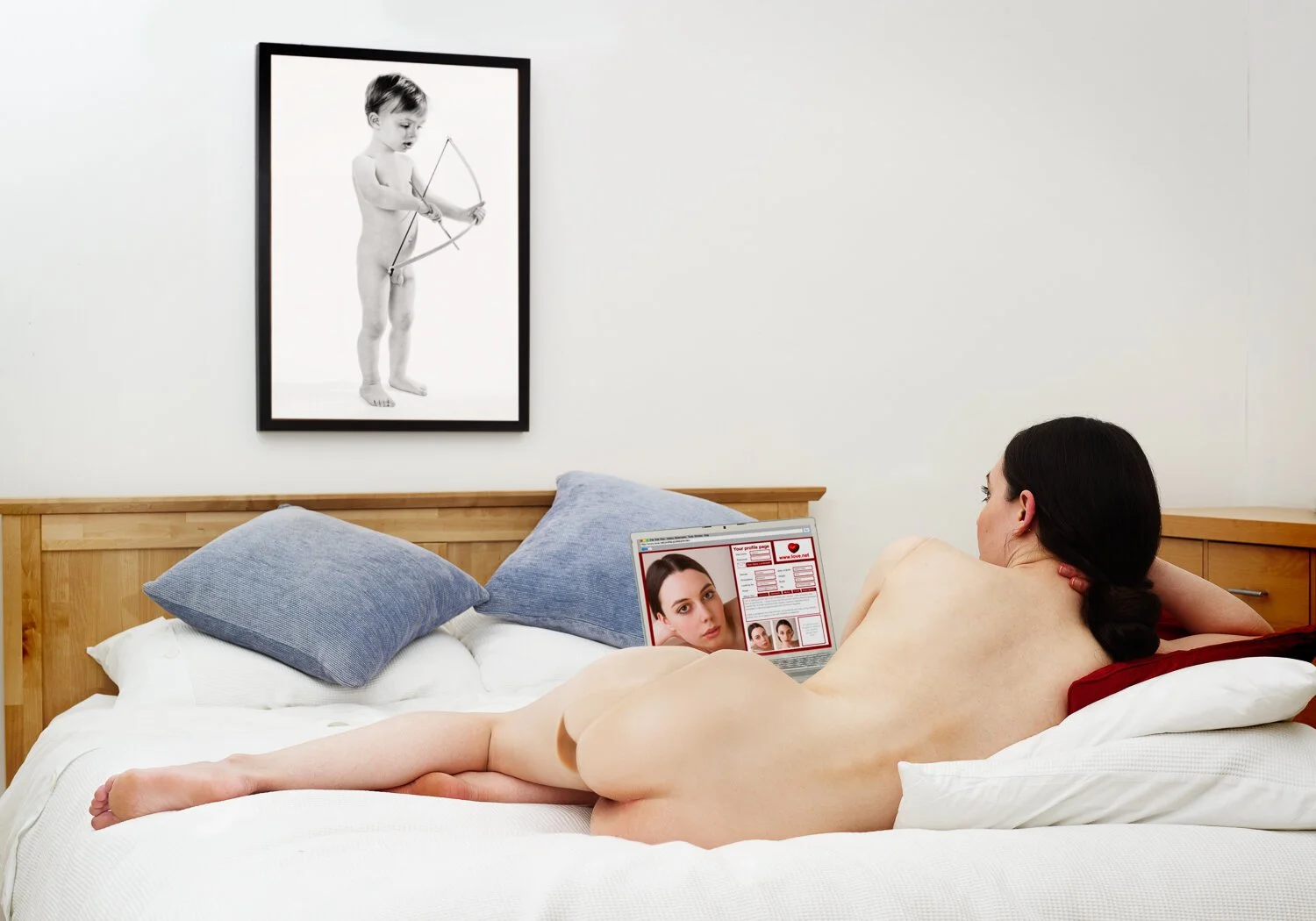
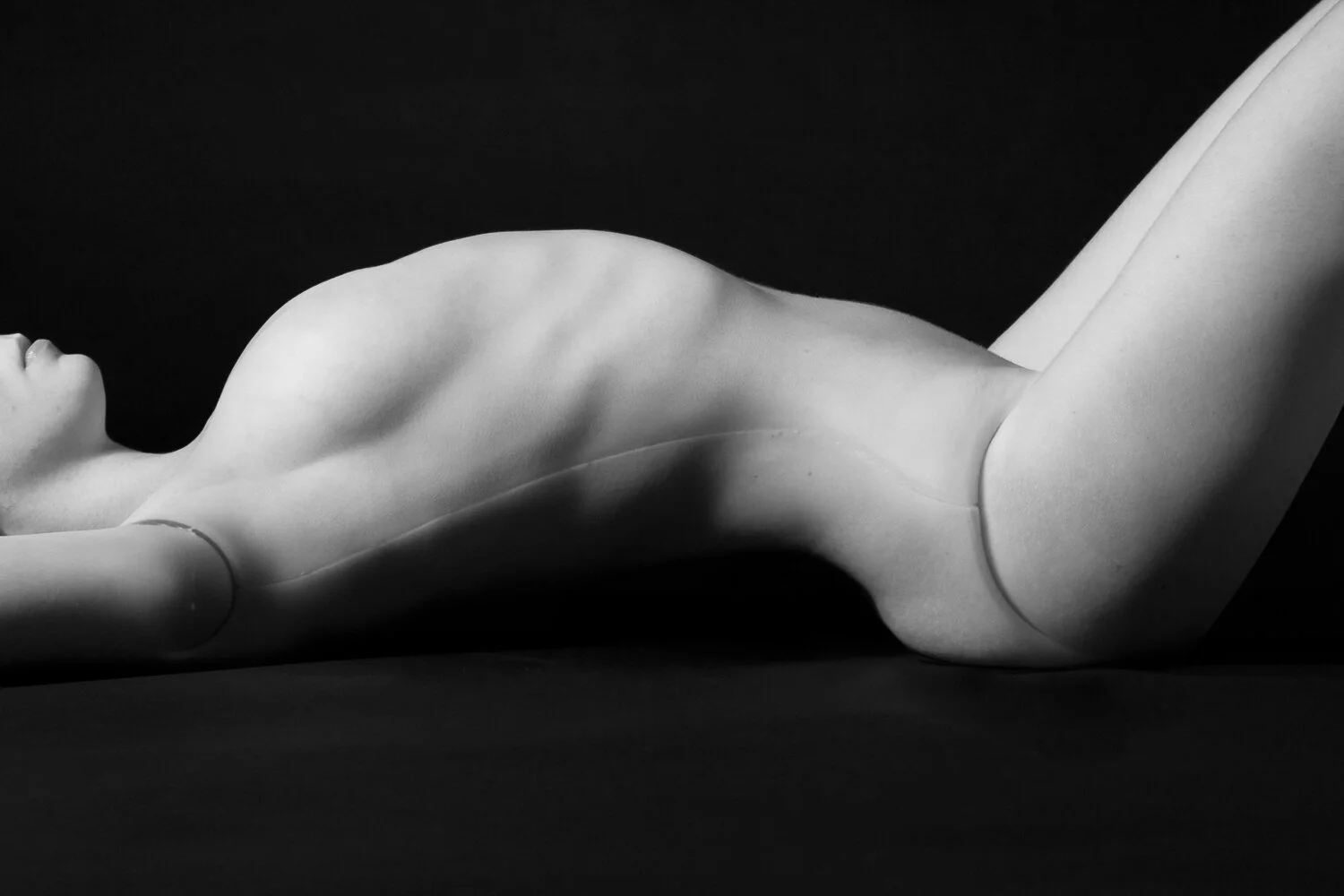
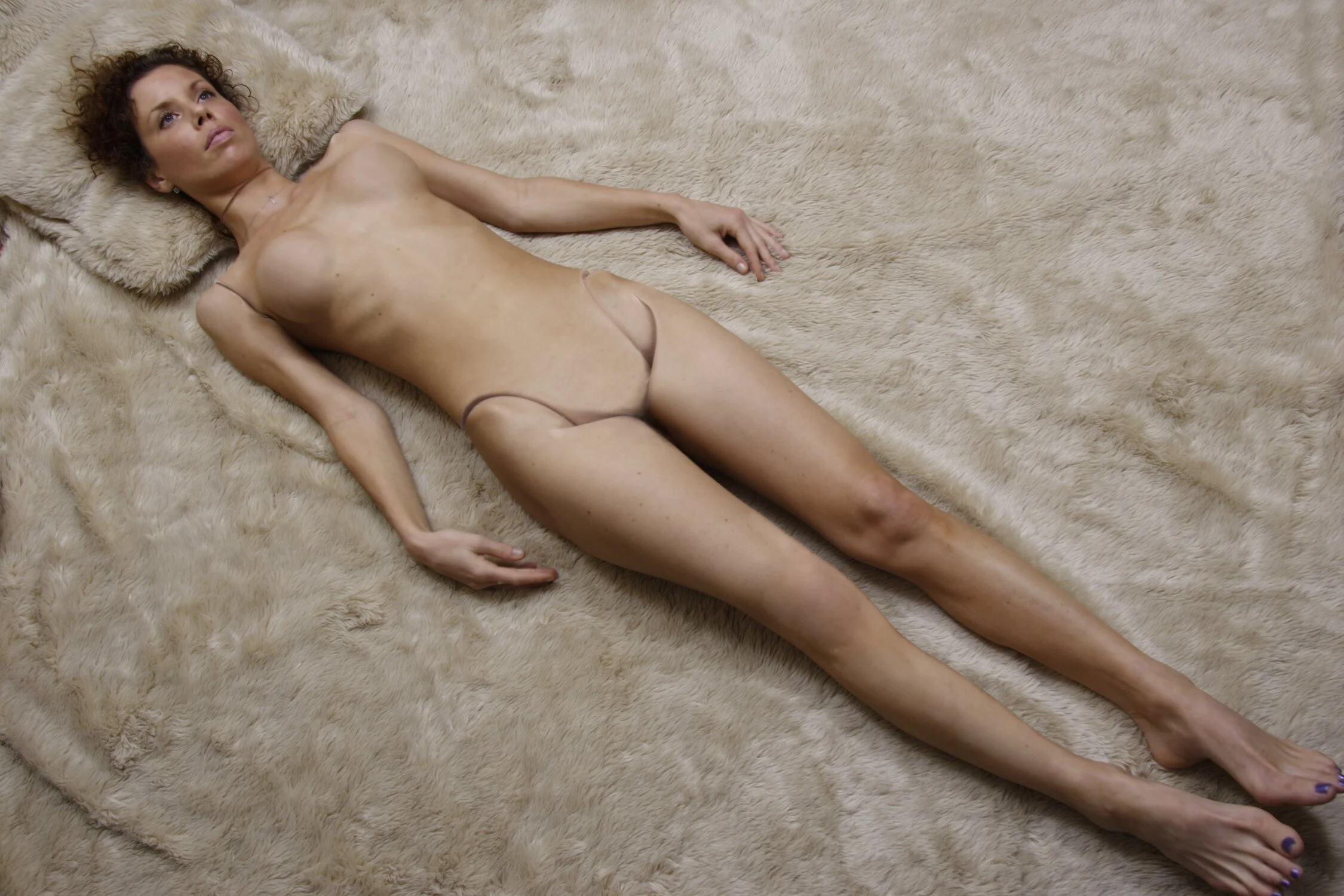
The four series that make up Disguises form a coherent arc. My Luxuria examines how desire and the sexualised body are defined by visual traditions rather than personal experience. Pygmalion's Prize transcribes three canonical reclining nudes from the western art historical tradition — Titian, Velázquez, Manet — into contemporary domestic interiors, tracing five centuries of the male desire to create, control and possess the image of femininity. iDolls follows the logic of that tradition to its contemporary endpoint, where the female body is styled, versioned and circulated as a consumer product. Cliché Numérique stands slightly apart — a cooler, more formally reflexive set of works examining photography's own complicity in the construction of visual meaning.
Disguises preceded the Guises body of work and made it possible. The earlier work revealed the machinery. The later work turned to examine what it costs.