
Man Made is a series of digitally constructed self-portraits examining masculinity, fatherhood, and the inheritance of male identity through a dialogue with one of mythology's most enduring stories.
In the myth, Daedalus builds the wings. Icarus flies too close to the sun and falls. But the story is rarely told from the position of the man who is both — who constructs the means of flight for those he loves, and who is himself subject to forces he cannot fully control, including those inherited from his own father. The series was made in the aftermath of family breakdown and separation from young children. It examines what culture does and does not permit men to carry — as fathers, as sons, and as the inherited products of fathers who could not show them how.
The six titles share a prefix: Man-. Man-Sized. Man-made. Man-handled. Man-up. Man-down. Man-hood. Each compound word or phrase carries its own cultural freight — the accumulated weight of what the word man is expected to mean. Each image places that expectation in tension with what is actually visible: tenderness where force is implied, grief where stoicism is demanded, the broken reflection where coherence is assumed.
The construction throughout is digital composite — the same method used across the Guises body of work, but deployed here at its most formally and emotionally concentrated. Images hold two moments of the same life simultaneously: the infant and the adult, the father and the son, the man who built the wings and the man who wore them. What the myth calls a story about ambition and hubris, the series reads as a story about what gets passed down — and what it costs when what was passed down cannot hold.
Man Made (on being both Icarus and Daedalus)
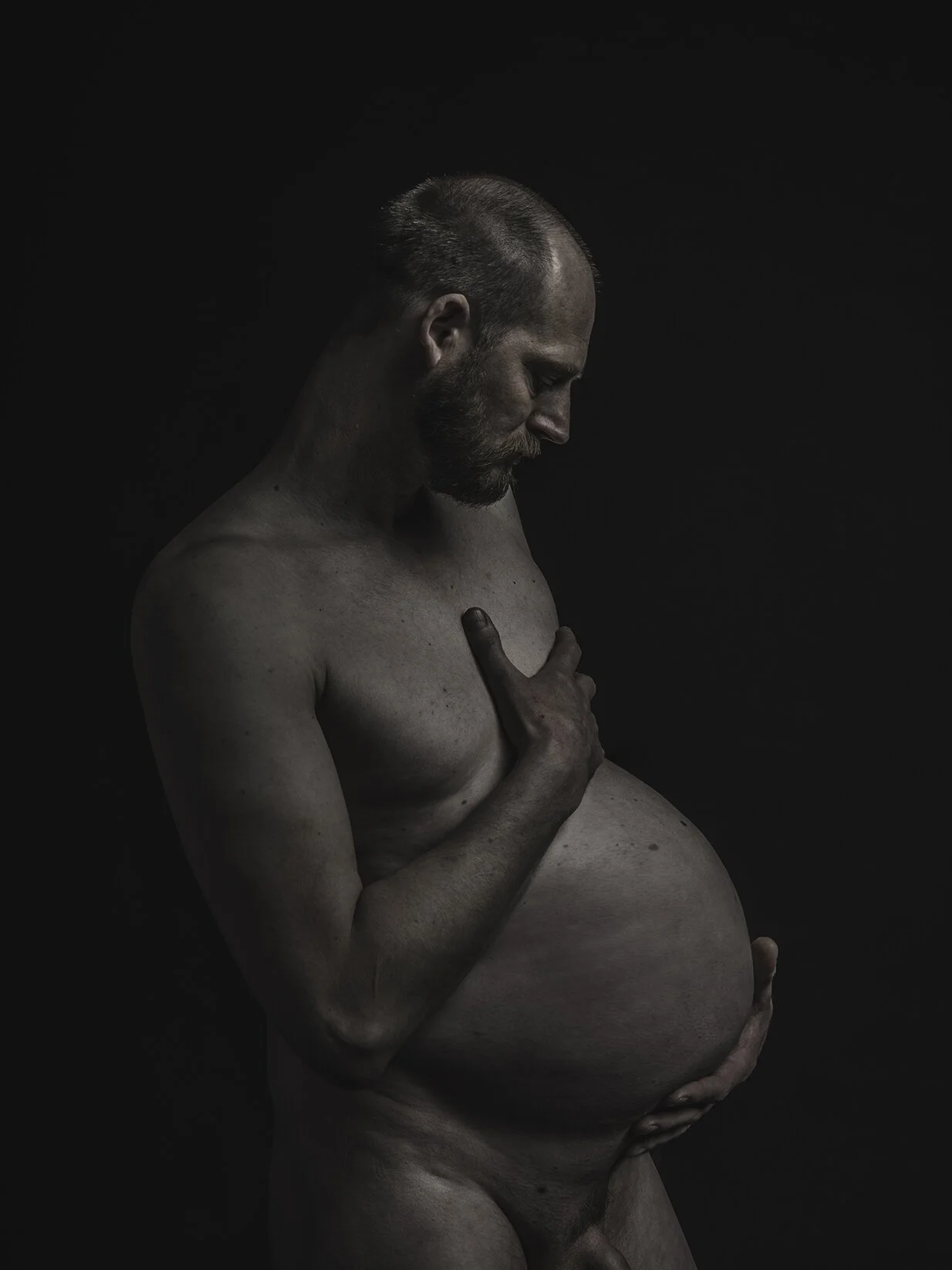
Man Made I, Man-sized
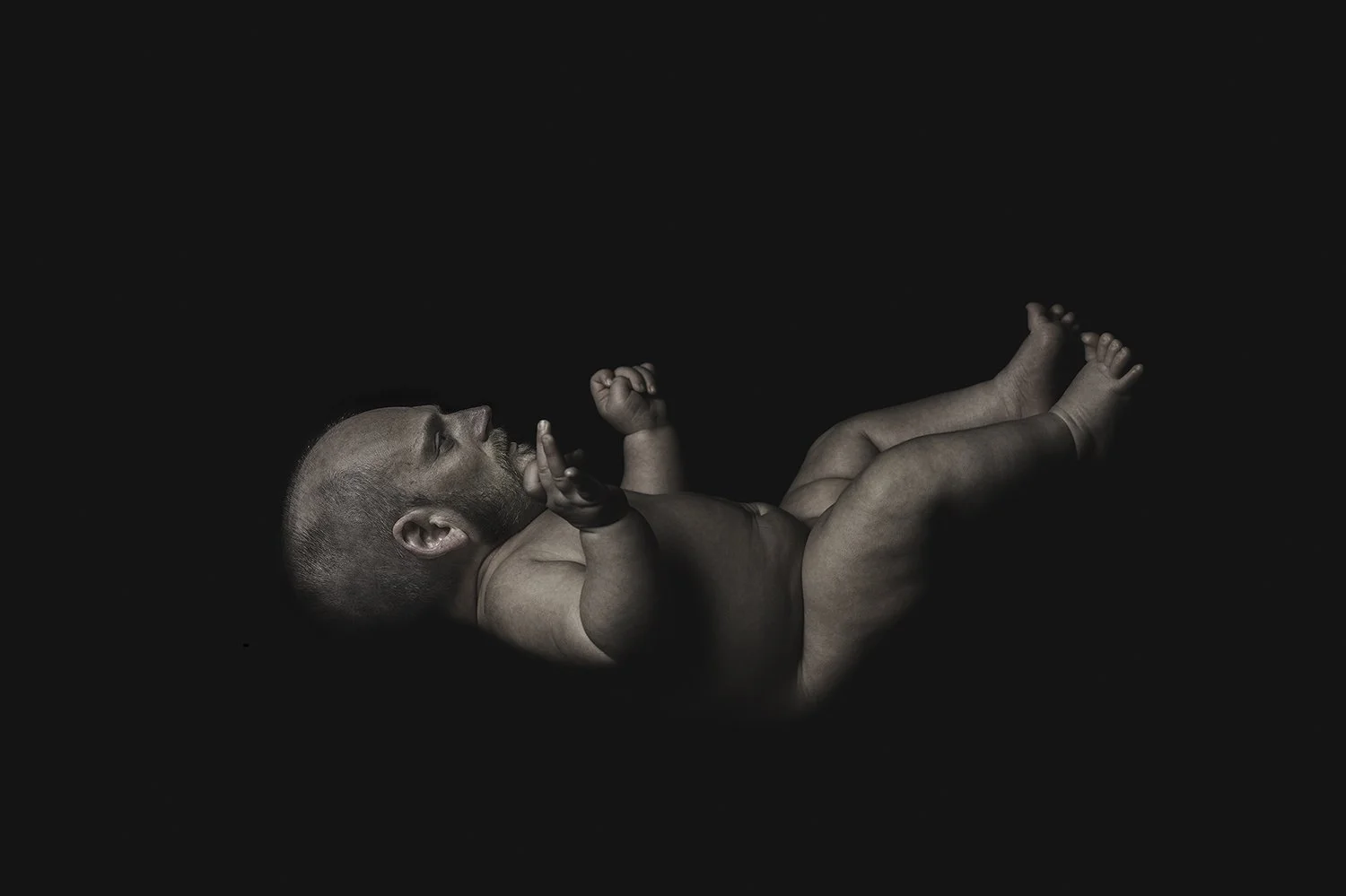
Man Made II, Man-made
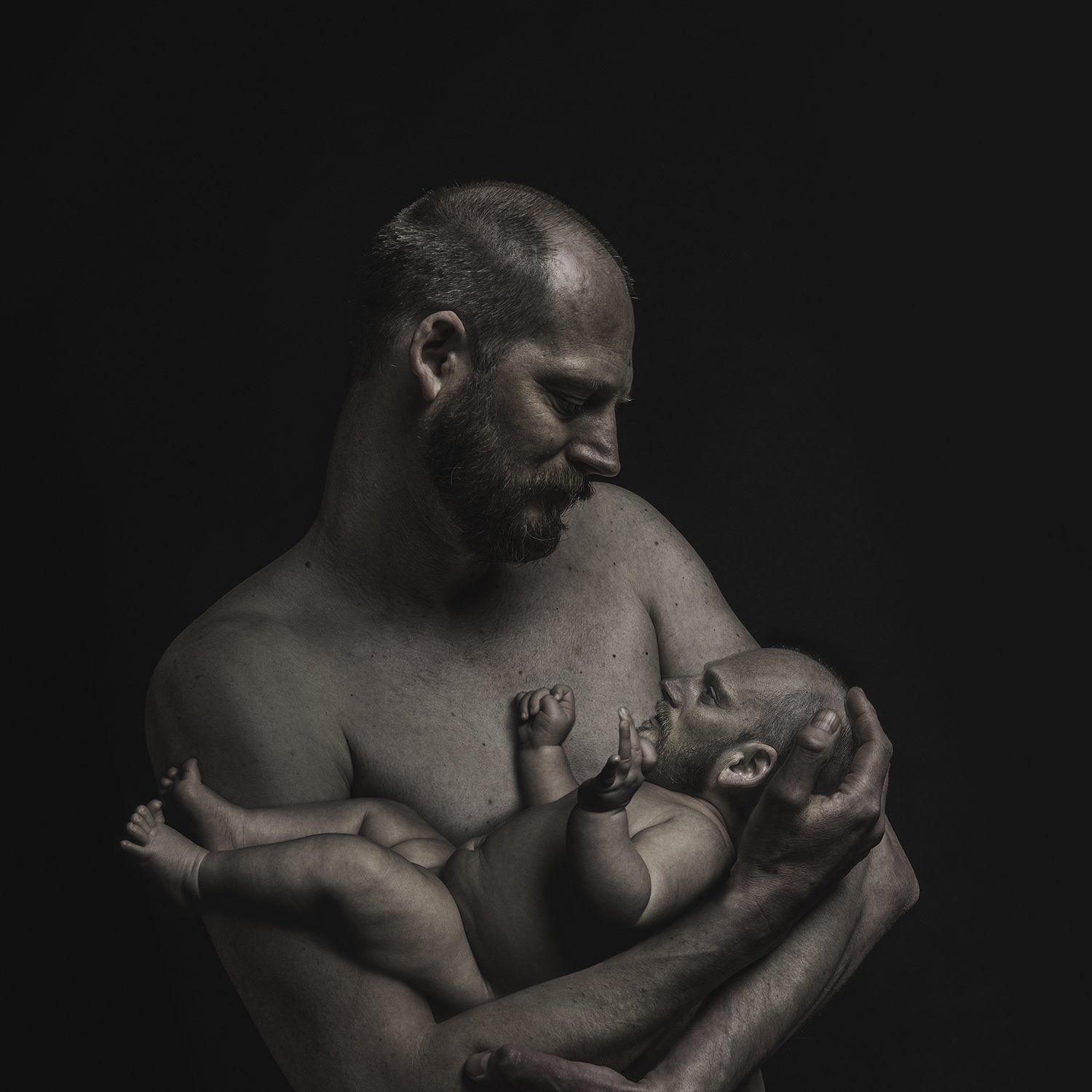
Man Made III, Man-handled
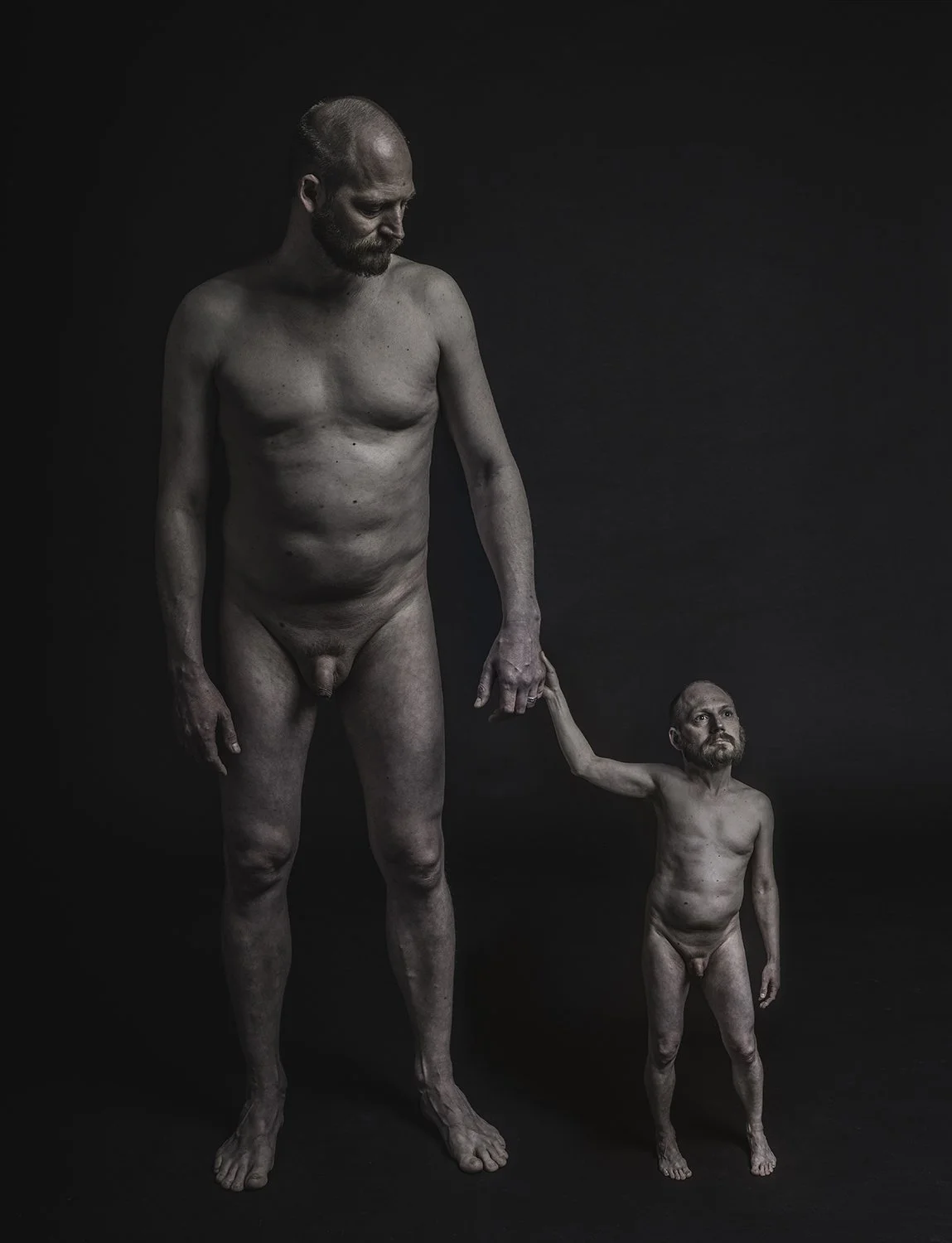
Man Made IV, Man-up
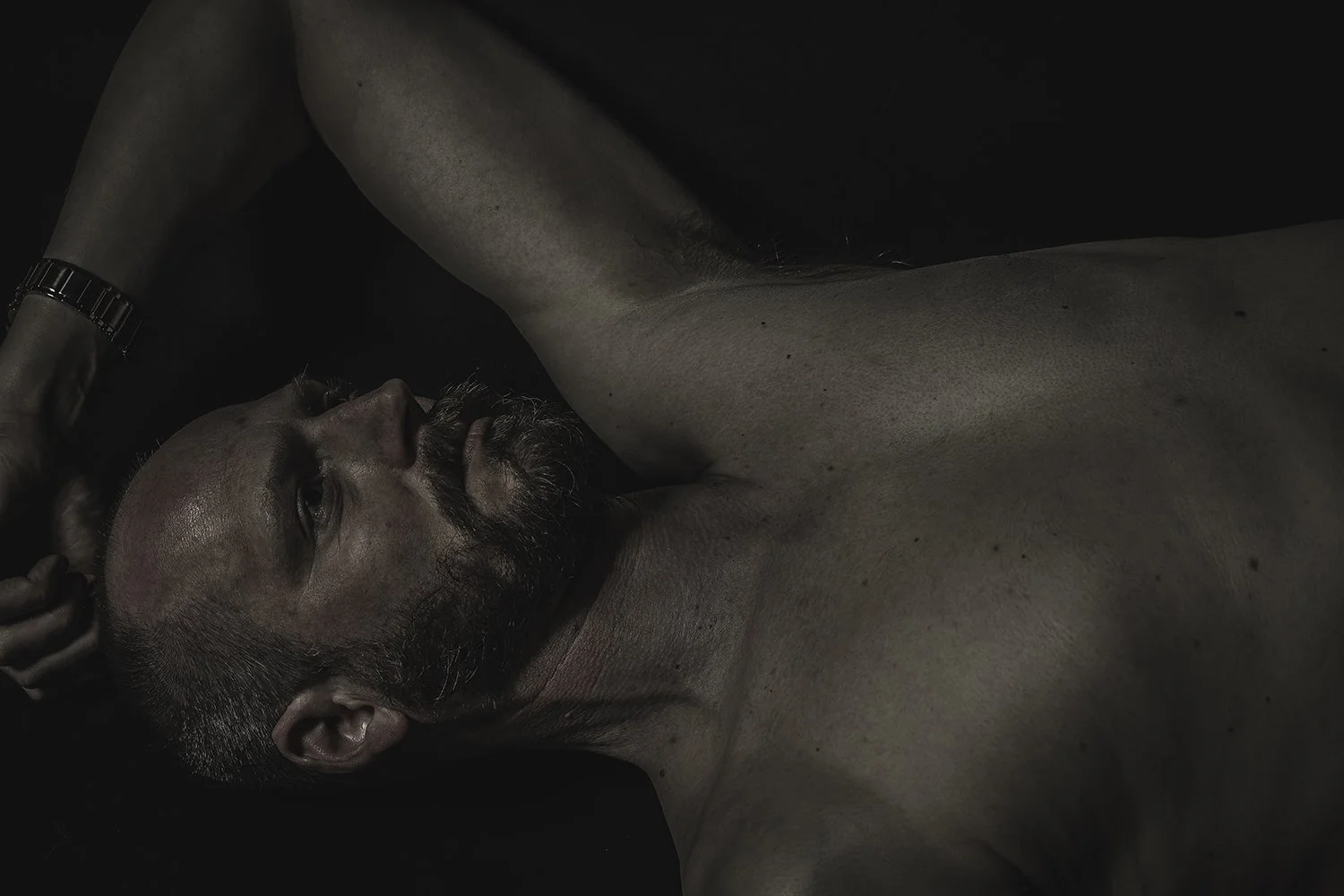
Man Made V, Man-down
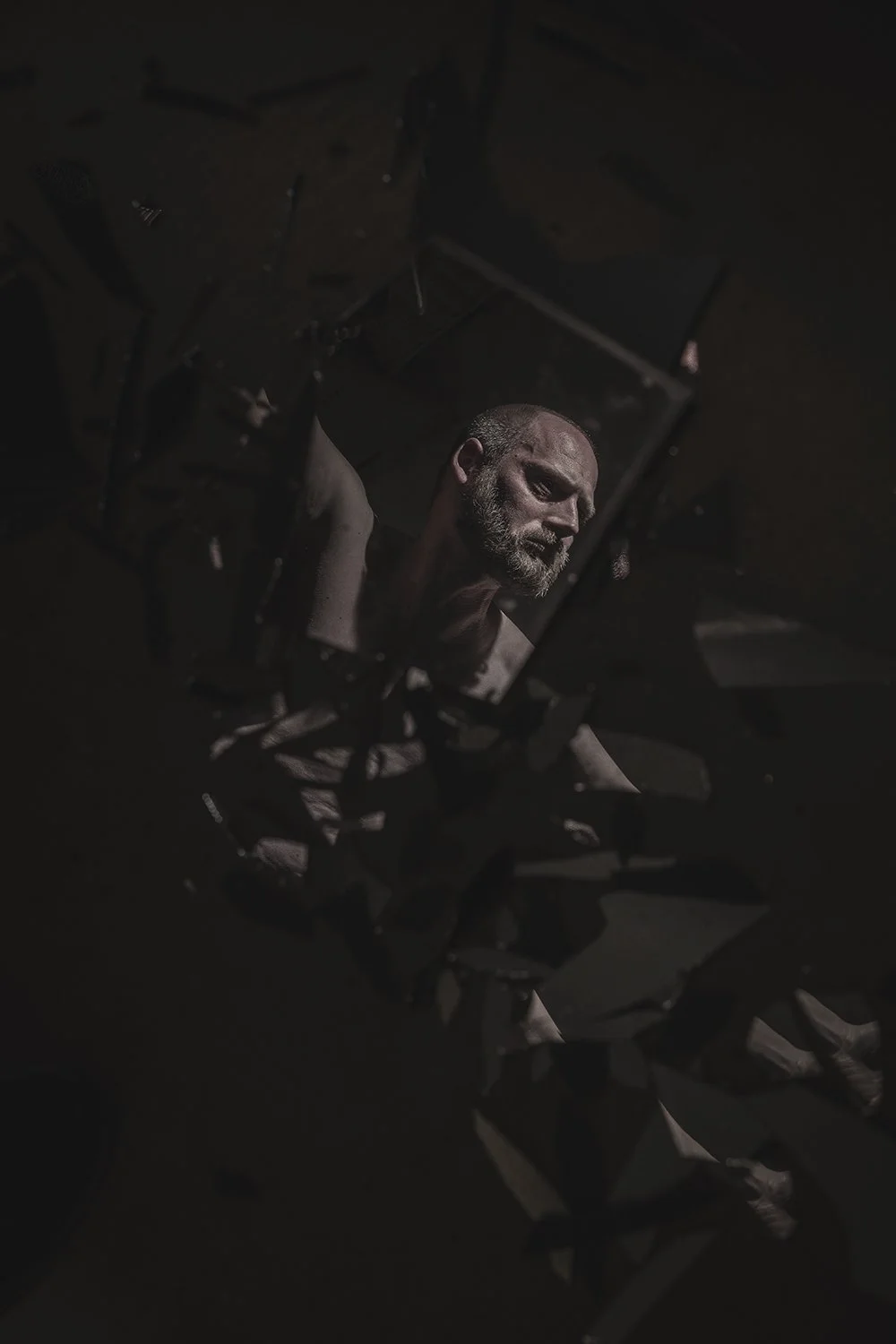
Man Made VI, Man-hood