
Heresy (Triptych)
Heresy is a photographic triptych that excavates the foundational mythologies of western patriarchy — specifically the Christian narratives of creation, temptation, and sacrifice — as the deep structural source code from which contemporary gendered scripts derive much of their cultural authority.
Working through a triptych that systematically inverts and reframes each narrative, the series argues that these stories are not divine truth but cultural construction — and that their construction has assigned roles, culpability, and costs along gendered lines in ways that continue to operate in secular culture long after explicit belief has faded. The domestic settings are deliberate: the living room, the bathroom hallway, the stag night refuse the mythological register of the originals, insisting that these narratives play out not in some transcendent realm but in the ordinary spaces where people actually live.
The three images move through the arc of the Christian story. Heresy I — Your very own set of keys my love inverts Michelangelo's Creation of Adam, replacing the transmission of divine masculine power with a matrilineal exchange of generative power between two Black women, in a bathrobe, in an ordinary interior — the body before shame, before the gendered scripts of modesty are imposed. Heresy II — Look at you Eva, aren't you pretty inverts the story of the Fall: Eva is not the agent of temptation but its target, surrounded by three formally dressed versions of the artist — the corporate machinery of the male gaze — who offer her a mirror and a phone. The title is not a compliment. It is the voice of the structure, dressed as one. Heresy III — Jess's show for Marius, Dom and Jack reframes the Crucifixion: a woman performs her own sacrifice for a male audience celebrating a stag night, glancing at her watch — not transcendent, but working. The redemption, as always, belongs to someone else.
The artist appears as all male figures across the triptych, acknowledging his own implication in the structures being critiqued. This work is not a critique of Christian faith or its followers. It is an interrogation of the residual narrative structures that continue to authorise cultural scripts long after the faith itself has ceased to be the common ground.
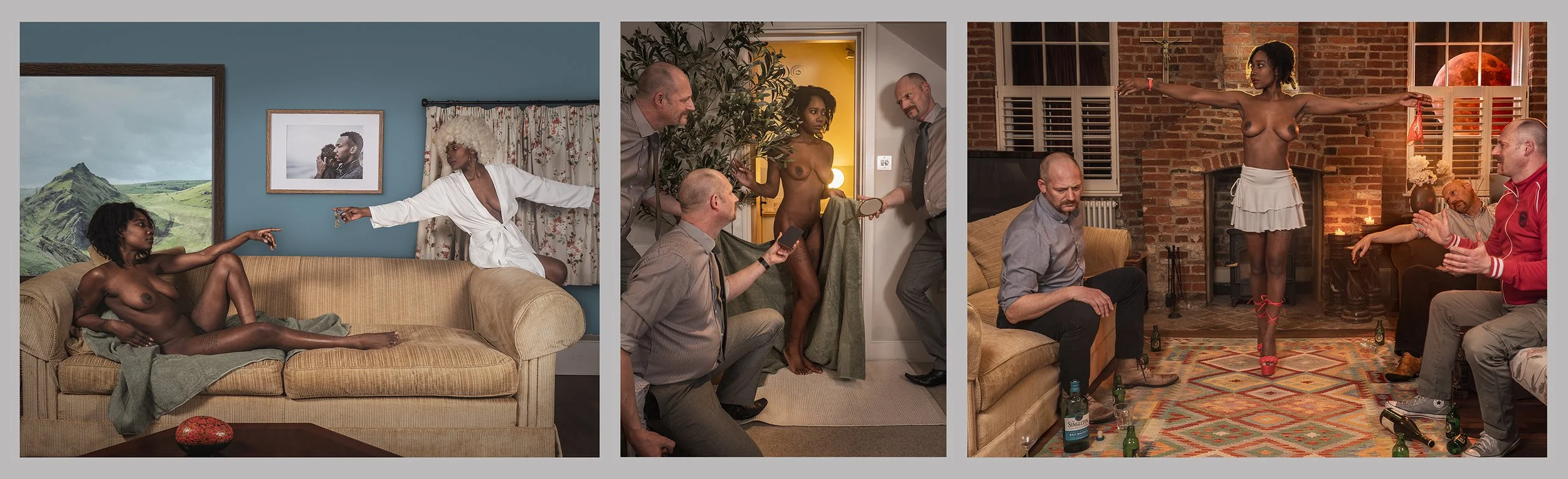
Heresy Triptych
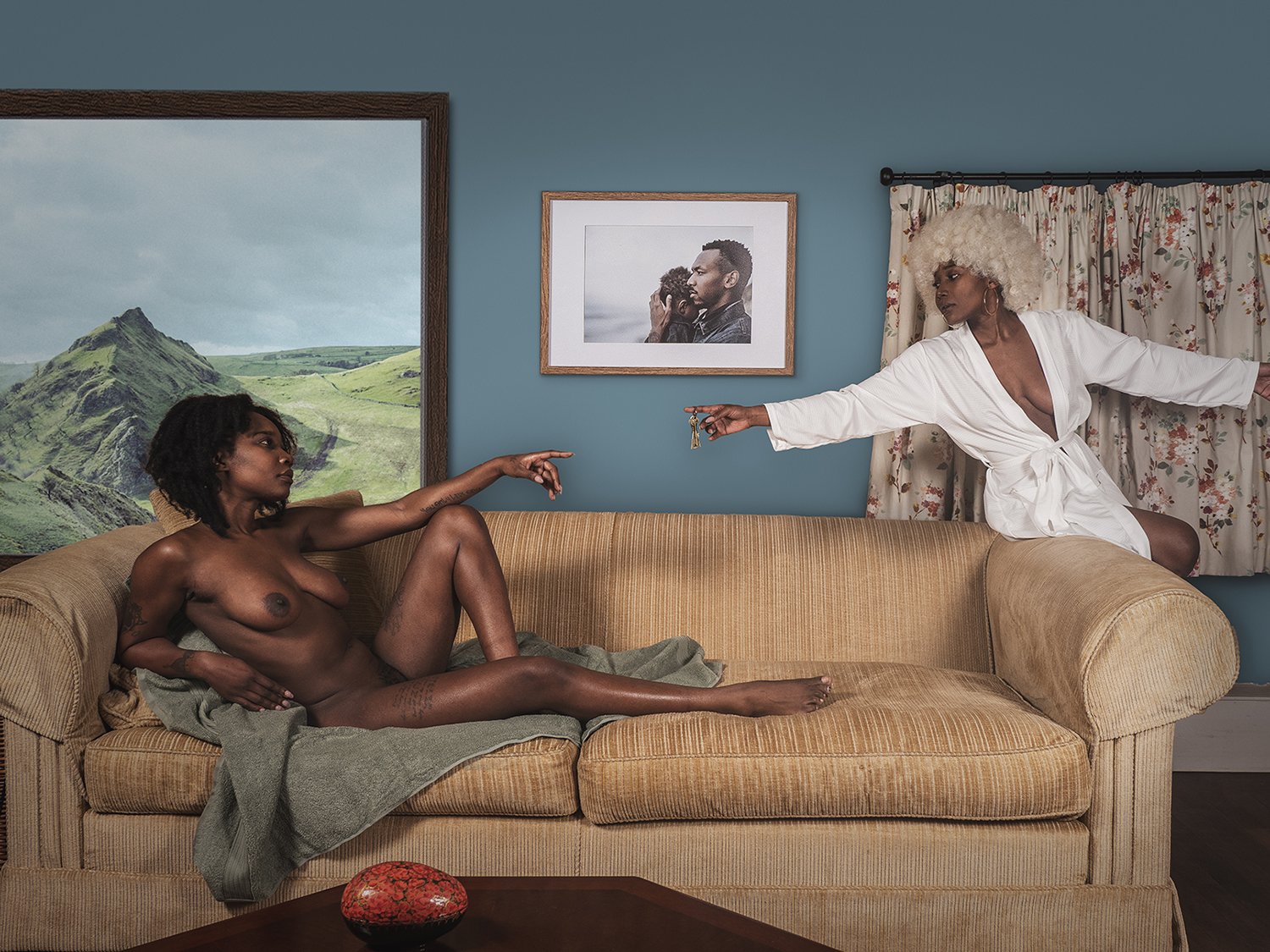
Heresy I - "Your very own set of keys my love"
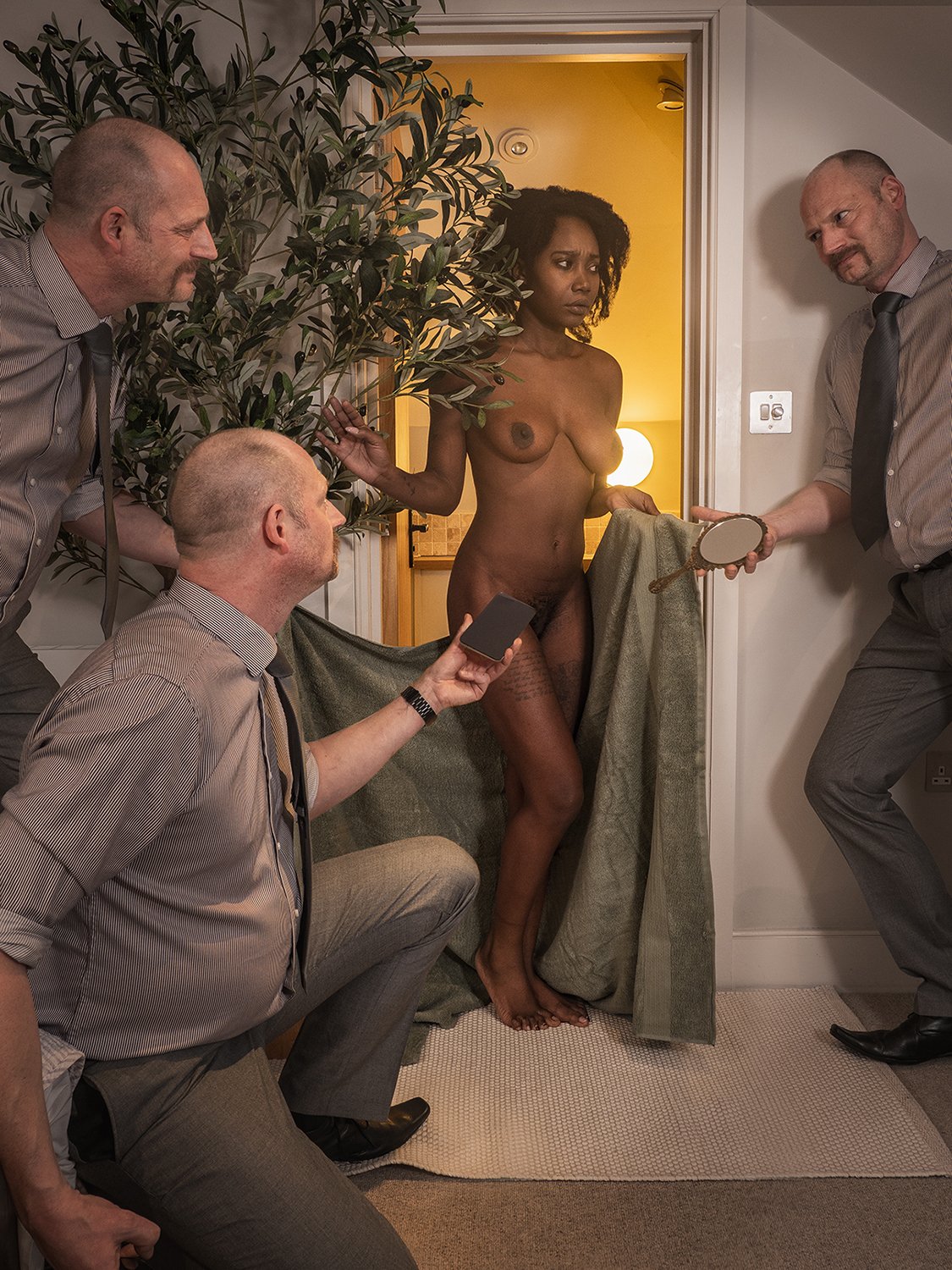
Heresy II - "Look at you Eva, aren't you pretty"
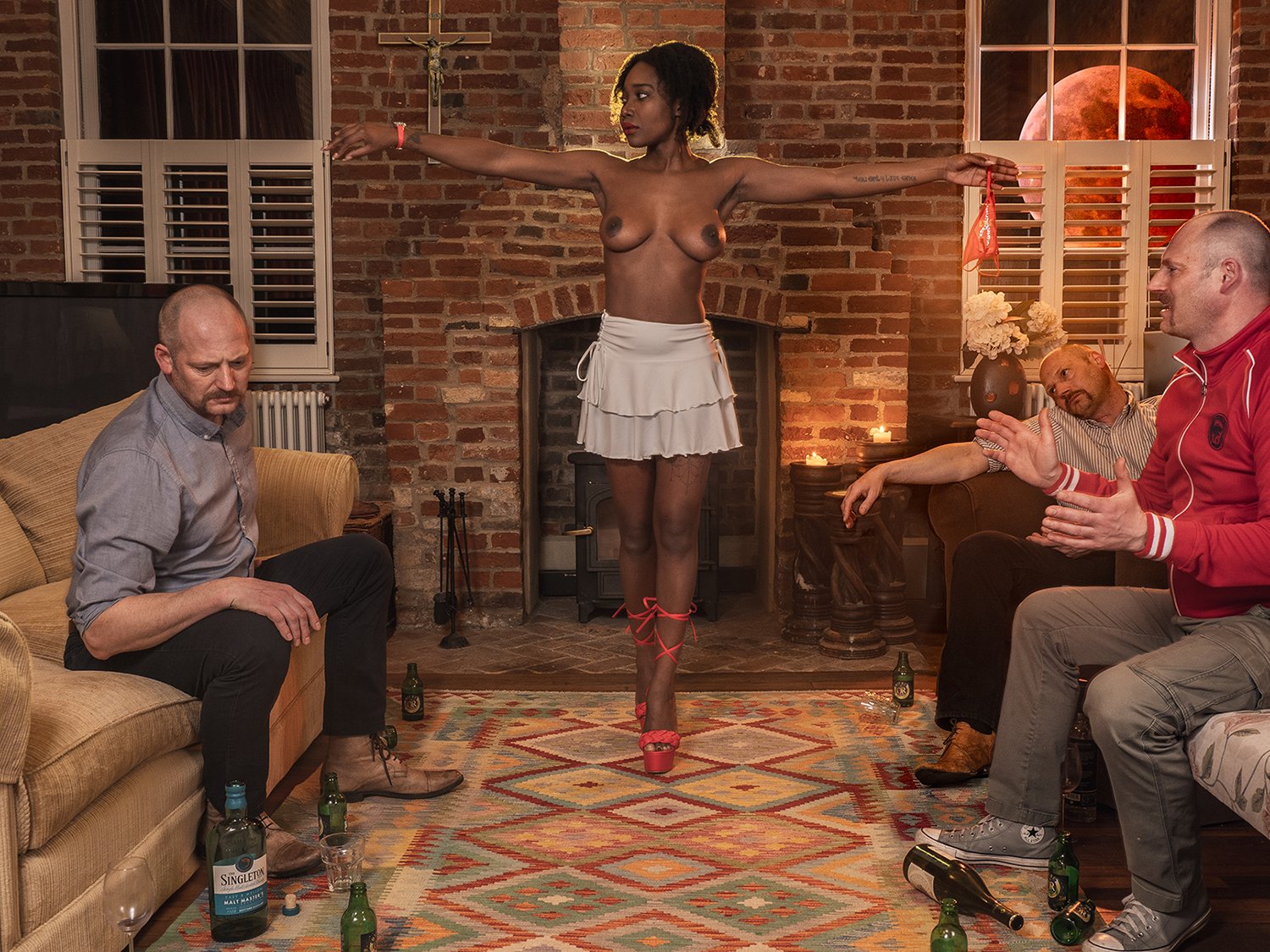
Heresy III - Jess's show for Marius, Dom, and Jack was crucifying in her stripper's heels
References
-
The Creation of Adam by Michelangelo — depicting the moment of creation, often read as a symbolic exchange between the divine and the human.
-
The Biblical story of the Garden of Eden — often associated with temptation, knowledge, and the moment of transgression.
-
Crucifixion by Titian — often associated with sacrifice, suffering, and redemption within Christian visual tradition.