
Trinity (Triptych)
Trinity is a photographic triptych that stages a standoff between the inherited models of masculinity encoded in the Christian concept of the Father, Son, and Holy Spirit — and by extension in the cinematic tradition of the Mexican standoff — as a means of interrogating the mechanism by which patrilineal models of masculine identity are transmitted, internalised, and ultimately found wanting.
The series argues that the theological structure of the Trinity — Father as punishing authority, Son as flesh subject to that authority, Holy Spirit as unrealised ideal — is not merely a matter of religious doctrine but a persistent cultural grammar through which men learn to understand their relation to power, inheritance, and one another. That grammar produces a zero-sum game: identities that cannot coexist without threat, locked in configurations where nobody wins and nobody leaves. The Mexican standoff is not a metaphor imported from elsewhere — it is already there, latent, in the structure itself.
The three images move through the biblical arc that underwrites this grammar. Trinity I — Showing up for dad draws on the story of the Sacrifice of Isaac: a father's faith demonstrated through willingness to destroy his son, a violence stayed not by the father's own conscience but by divine intervention. Trinity II — Cleaning up my act reframes the Baptism of Christ: the moment of recognition and anointing, the son ratified in his role by the authority of the father and his structures. Trinity III — Playing the old man's loaded hand brings the arc to its conclusion through Caravaggio's The Cardsharps — a game in which the rules are already fixed, the cards already seen, and the innocent party has no way of knowing they were never playing on equal terms.
The artist appears as all three figures across the triptych — Father, Son, and Holy Spirit — acknowledging that these are not external positions but internal ones: roles that the same man is required to occupy, or resist, or fail to embody, at different points in his life. The standoff is not between three different men. It is between three versions of the same one.
This work is not a critique of Christian faith or its followers. It is an interrogation of the residual narrative structures that the tradition has bequeathed to secular culture — structures that continue to authorise the transmission of rigid masculine scripts from one generation to the next, and to frame the cost of that transmission as natural, inevitable, and ordained.
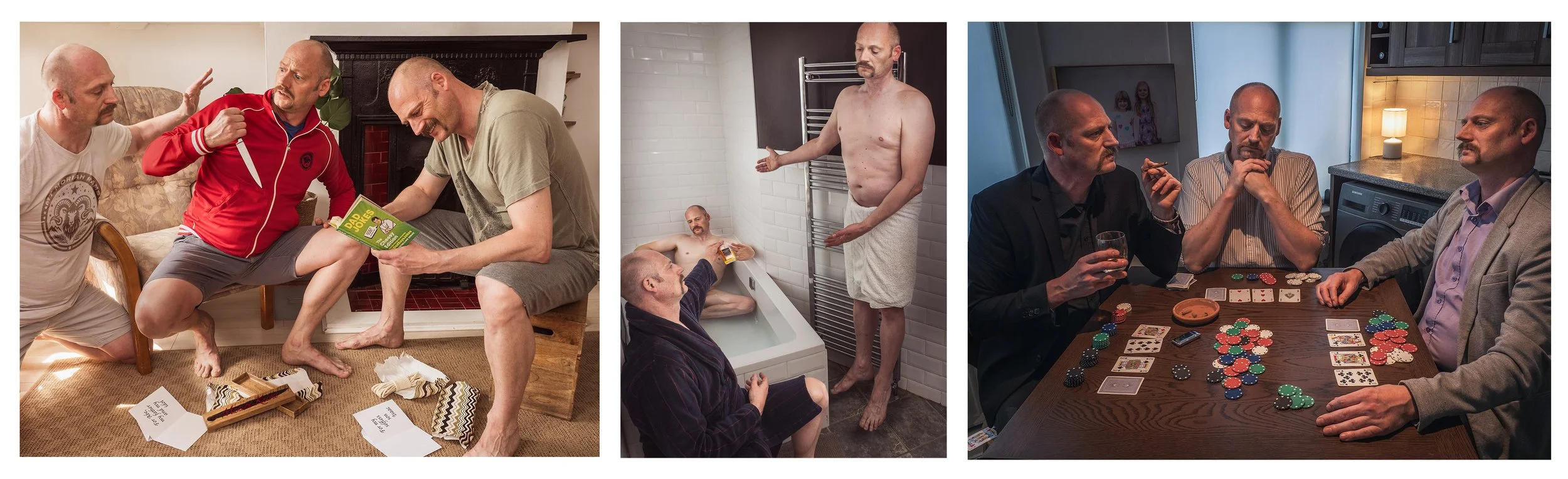
Trinity Triptych
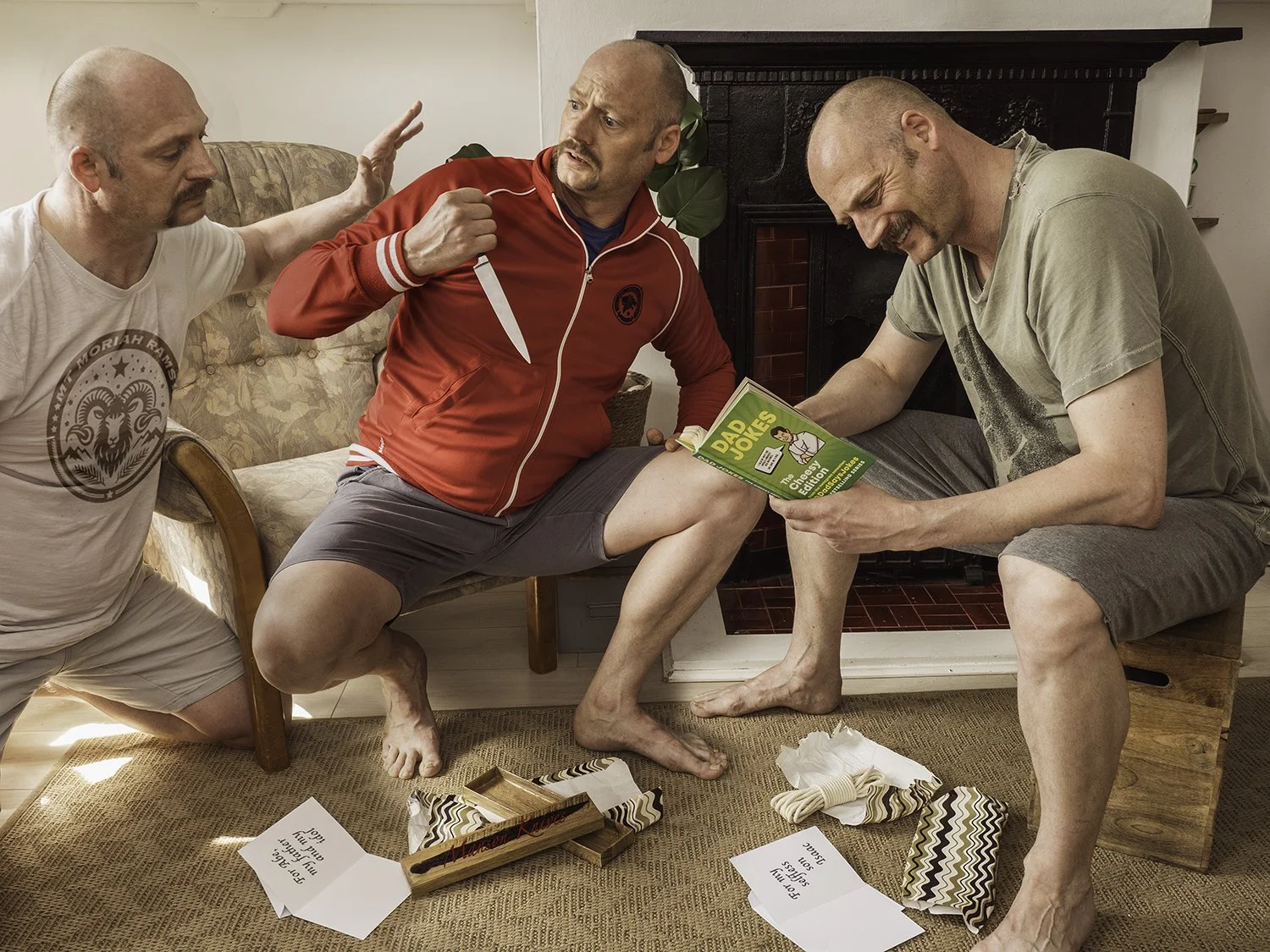
Trinity I – Showing up for dad
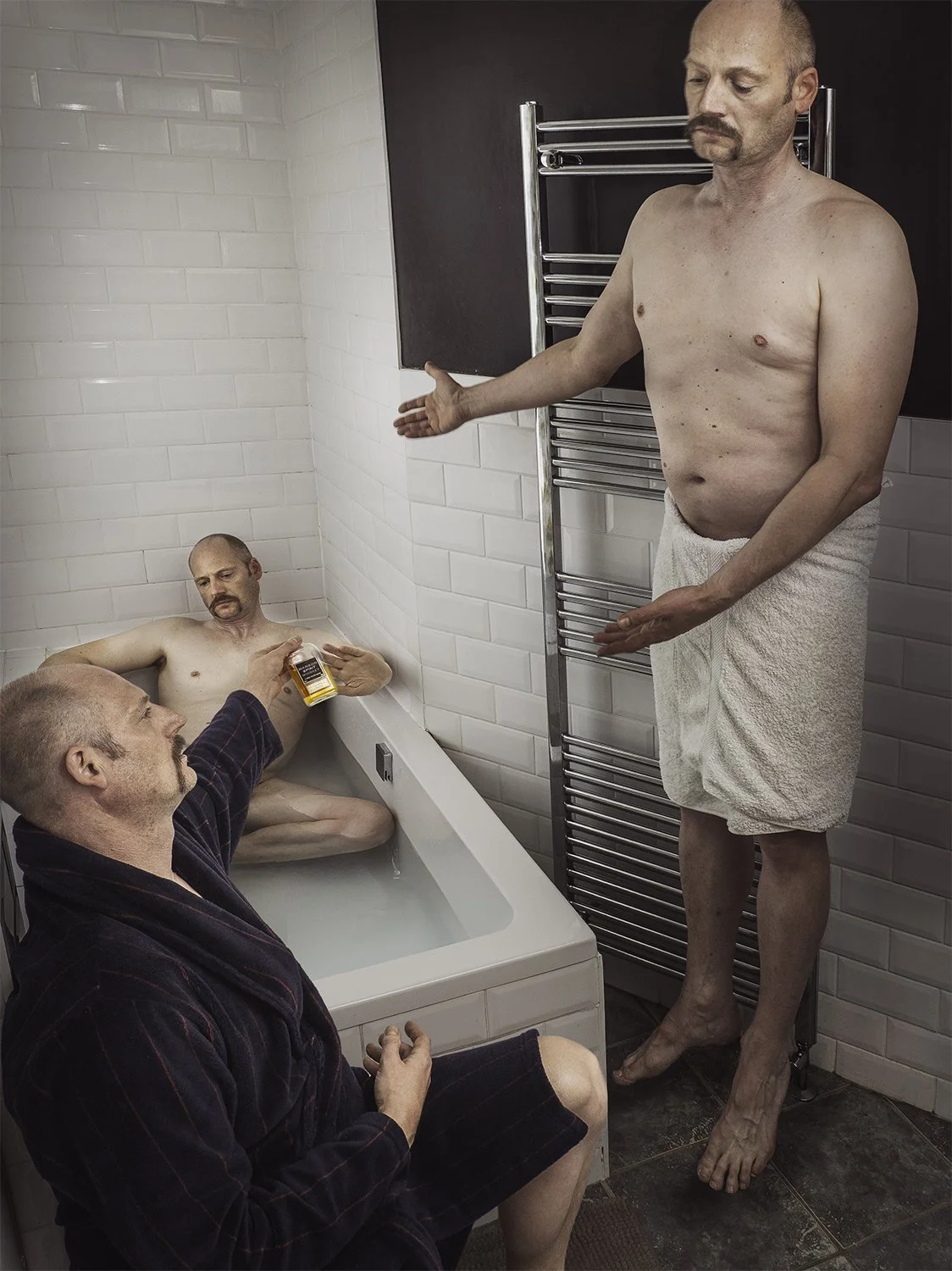
Trinity II – Cleaning up my act
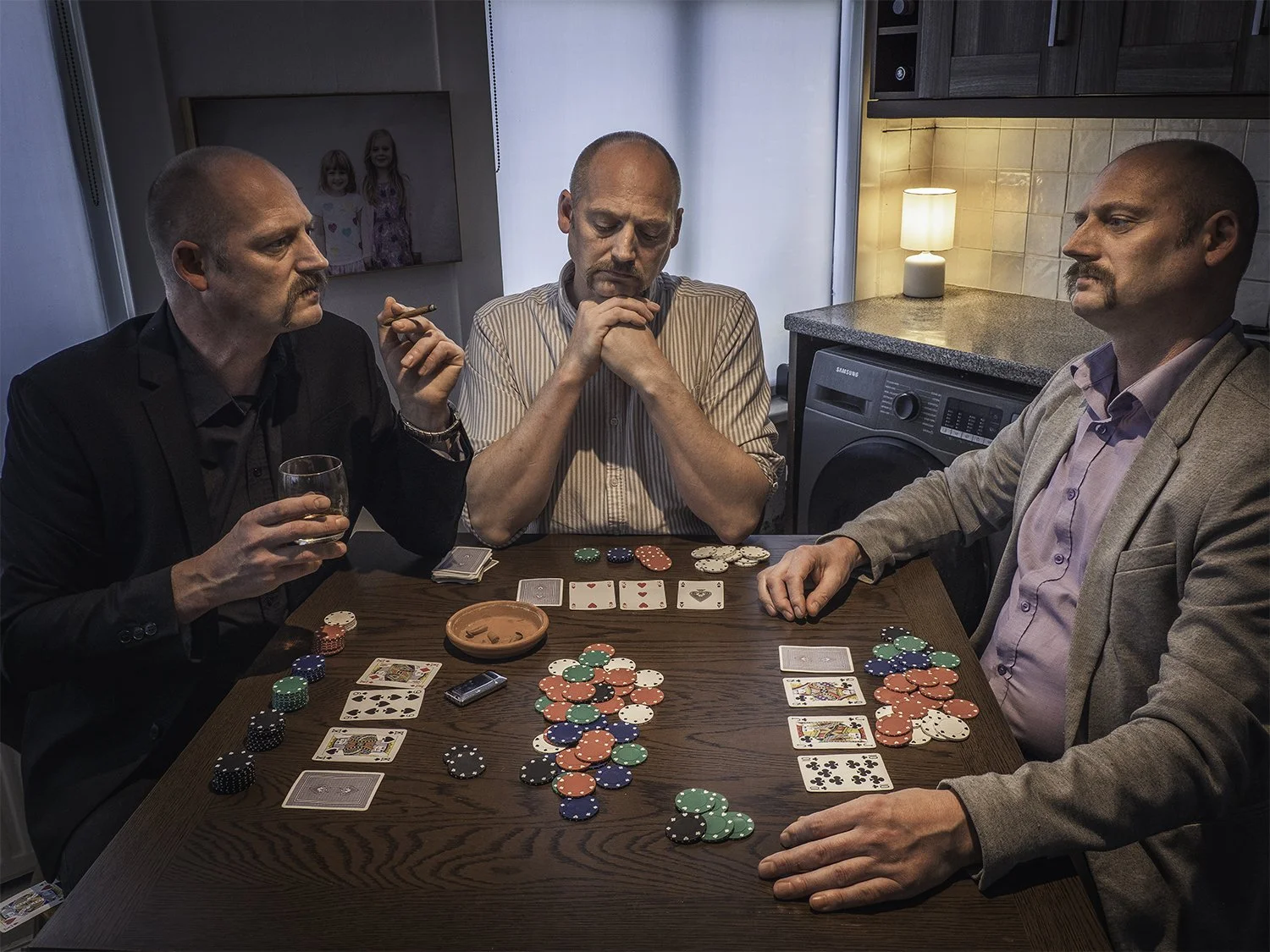
Trinity III – Playing the old man's loaded hand
References
-
The Biblical story of the Sacrifice of Isaac — Abraham commits to God to sacrifice his son Isaac as a demonstration of his faith. His hand is stilled in the final moments by an angel and a ram is sacrificed in Isaac’s place
-
The Biblical story of the baptism of Jesus by John the Baptist. An angel appears to recognise Christ as God’s envoy on earth.
-
The Cardsharps by Caravaggio, the Christian concept of the Holy Trinity, and the cinema trope of the Mexican Standoff – the zero sum game patriarchal male identities.