
Pygmalion’s Prize
Pygmalion's Prize takes its title from Ovid's Metamorphoses — the myth of the sculptor who carves his ideal woman from ivory, falls in love with his own creation, and is granted his wish when she is brought to life. The myth is one of western culture's oldest and most revealing stories about the male desire to create, control and possess the image of femininity.
The series transcribes three of the most significant reclining female nudes in the western art historical canon — Titian's Venus of Urbino (1538), Velázquez's Rokeby Venus (1647–51), and Manet's Olympia (1865) — relocating each from its original historical context into a contemporary domestic interior. Each figure is a digitally constructed composite of a human subject and a Barbie doll: the idealised, mass-produced template for the female body literally embedded within the bodies that art history has used to define female beauty for five centuries.
The three source paintings form a precise arc. Titian's Venus of Urbino presents the reclining female body as object of desire and possession — arranged, composed, available. Velázquez's Rokeby Venus introduces the mirror, and with it the question of self-image versus the gaze of others: John Berger observed that the woman surveys herself, but the surveyor is male, and the mirror is the instrument of that structure. Manet's Olympia was scandalous at the Paris Salon of 1865 not because of the nudity but because of the gaze — a real woman, not a goddess or allegory, who looked directly back at the viewer and refused to perform the availability the tradition demanded. She still looks directly back. That is still the most radical thing in the image.
Pygmalion's Prize sits within the Disguises body of work, following My Luxuria and preceding iDolls. Together, the three series trace the visual economies through which femininity has been constructed, commodified and circulated — from the Old Masters to Barbie.

Pygmalion's Prize I
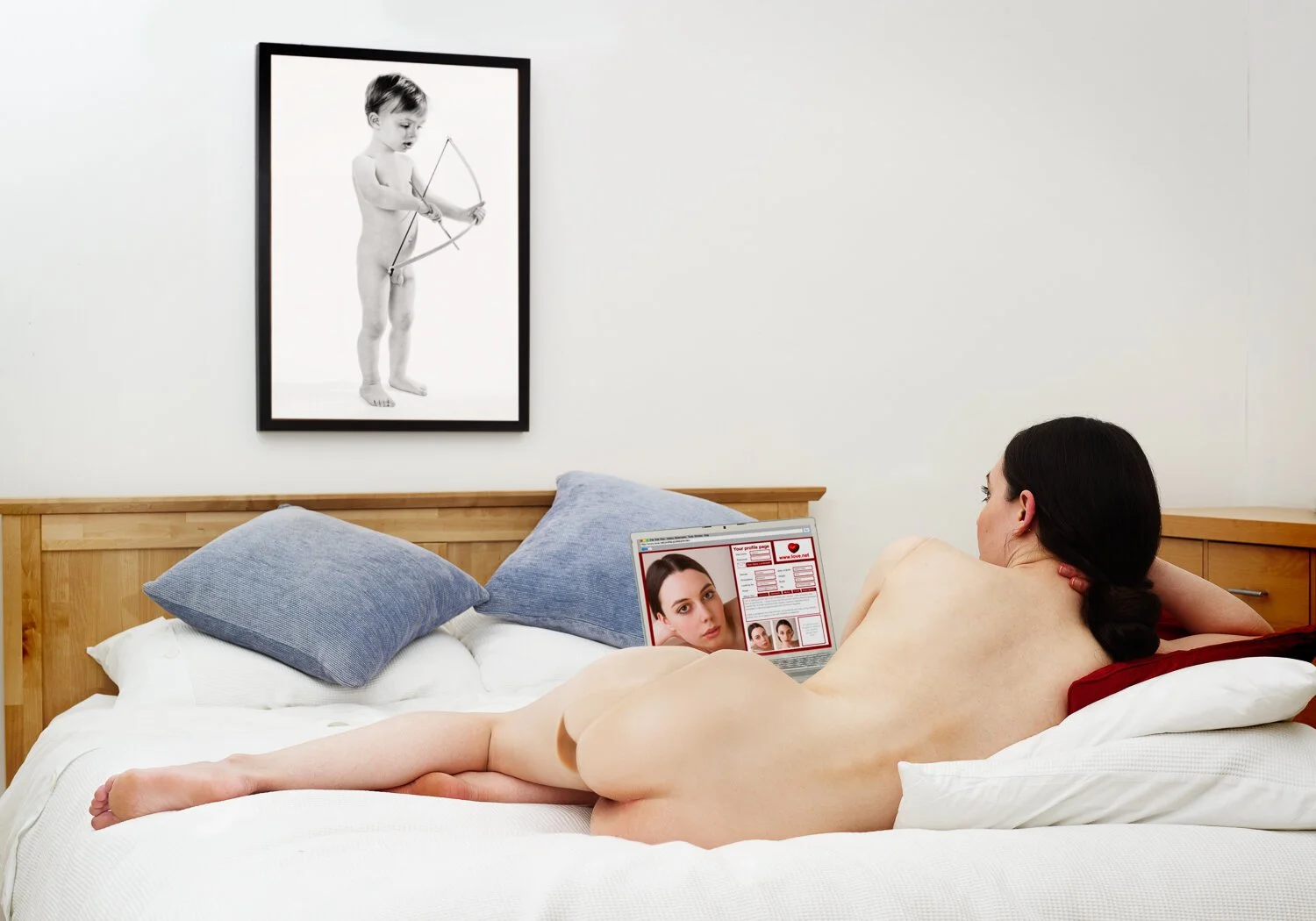
Pygmalion's Prize II

Pygmalion's Prize III
References
-
The Venus of Urbino by Titian — often associated with ideals of beauty, sensuality, and the dynamics of looking.
-
The Rokeby Venus by Diego Velázquez — a work often read in relation to beauty, reflection, and the act of seeing oneself through the gaze of others.
-
Olympia by Édouard Manet — often understood as a confrontation with the viewer, challenging conventions of the nude and the power of the gaze.