
Trinity III
Trinity III — Playing the old man’s loaded hand
I was struggling for a long time to think of how to represent the zero-sum competition of the Mexican standoff movie trope in a domestic setting and without guns. I wanted to combine the hyper-masculine imagery of this type of gun showdown which typically features three subjects with the Christian concept and iconography of the Holy Trinity as a way of exploring the notion of inherited male trauma and problematic models of masculinity being passed down from father to son. Having previously researched iconic stand-off scenes from the films The Good, the Bad, and The Ugly, and Reservoir Dogs, and subsequently doing a few test shoots I had to leave the subject to one side for a while to focus on writing my exegesis. Then having reached an impasse in my writing which required reference to this final practical project to progress, I had to return to pondering how I could resolve the dilemma. It is hard to know how much of what I had read, observed and written in the intervening few months since my previous conscious attention to the problem, but only a few days after starting to consider a resolution, and apparently out of the blue, an idea occurred to me that seemed like it could be the solution. This sort of revelation is entirely in accordance with Patricia Townsend’s research and theory on the creative process. She describes that after the pre-sense, comes a period of research, possibly experimentation, and then a period of gestation which results in a moment of illumination. Townsend refers to the fruitful of work of the unconscious in the period of gestation, quoting Bolas’ term of the ‘unthought known’ to describe the surfacing of such a resolution.
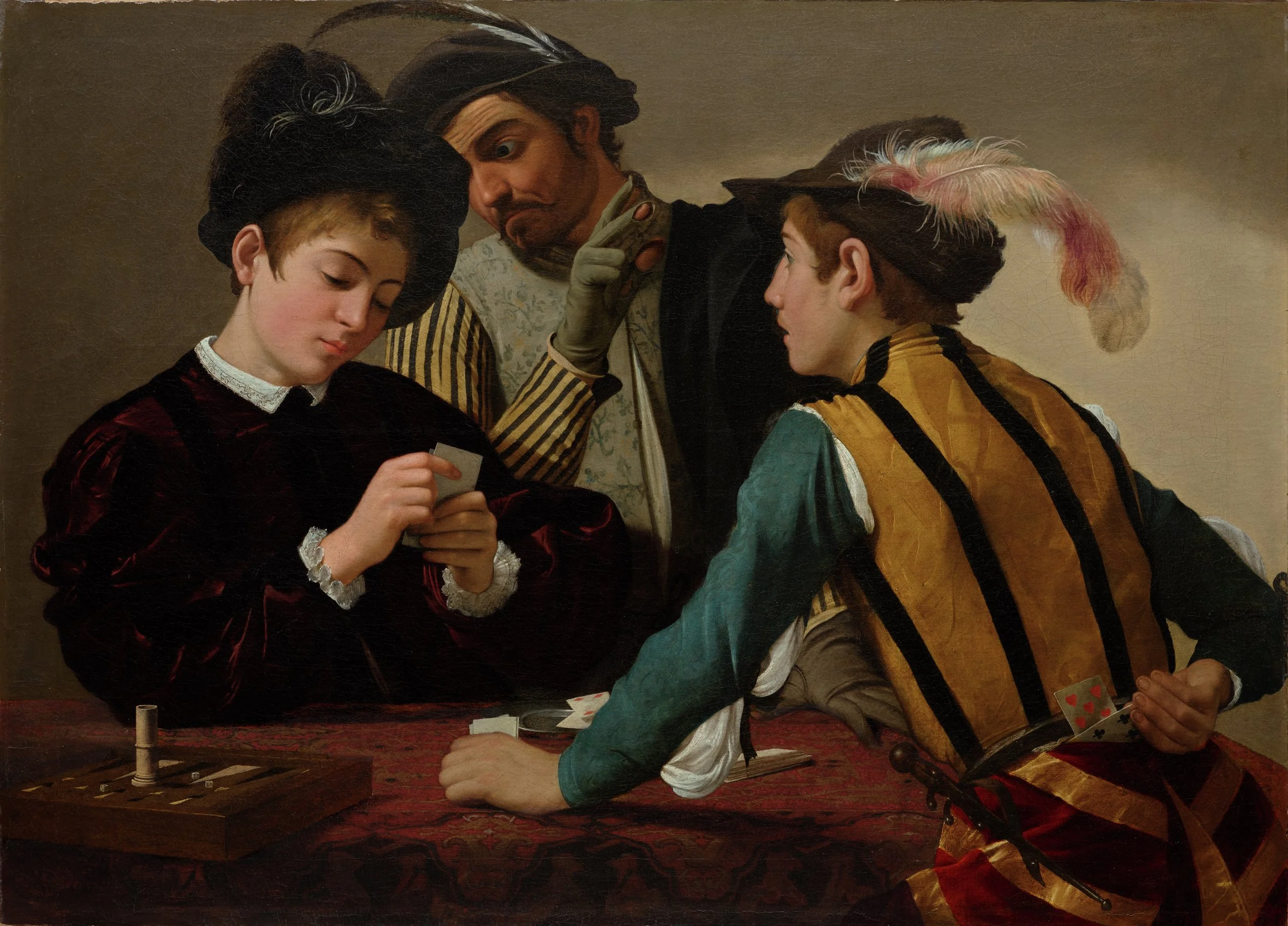
Caravaggio - The Cardsharps (1596-97) Kimbell Art Museum
And my ‘unthought known’, my lightbulb moment, was that I could use a poker game to replicate the dynamic of the Mexican standoff. It is entirely feasible for a domestic setting and the use of playing cards and gambling chips would provide opportunities for including layers of symbolism enriching the potential meaning/s that could be carried and read in the image. I was vaguely aware of Caravaggio’s painting of the Cardsharps (above), but the painting below by La Tour was new to me. I knew I would not be making a direct transcription of either (unlike my treatment of Michelangelo’s Creation of Adam), but I took inspiration from them in the use of a hidden card (visible to the viewer) at the disposal of the cheater to stack the deck or load the hand in their favour. It is useful nonetheless to be aware of and able to refer to some precedents in art practice and history.
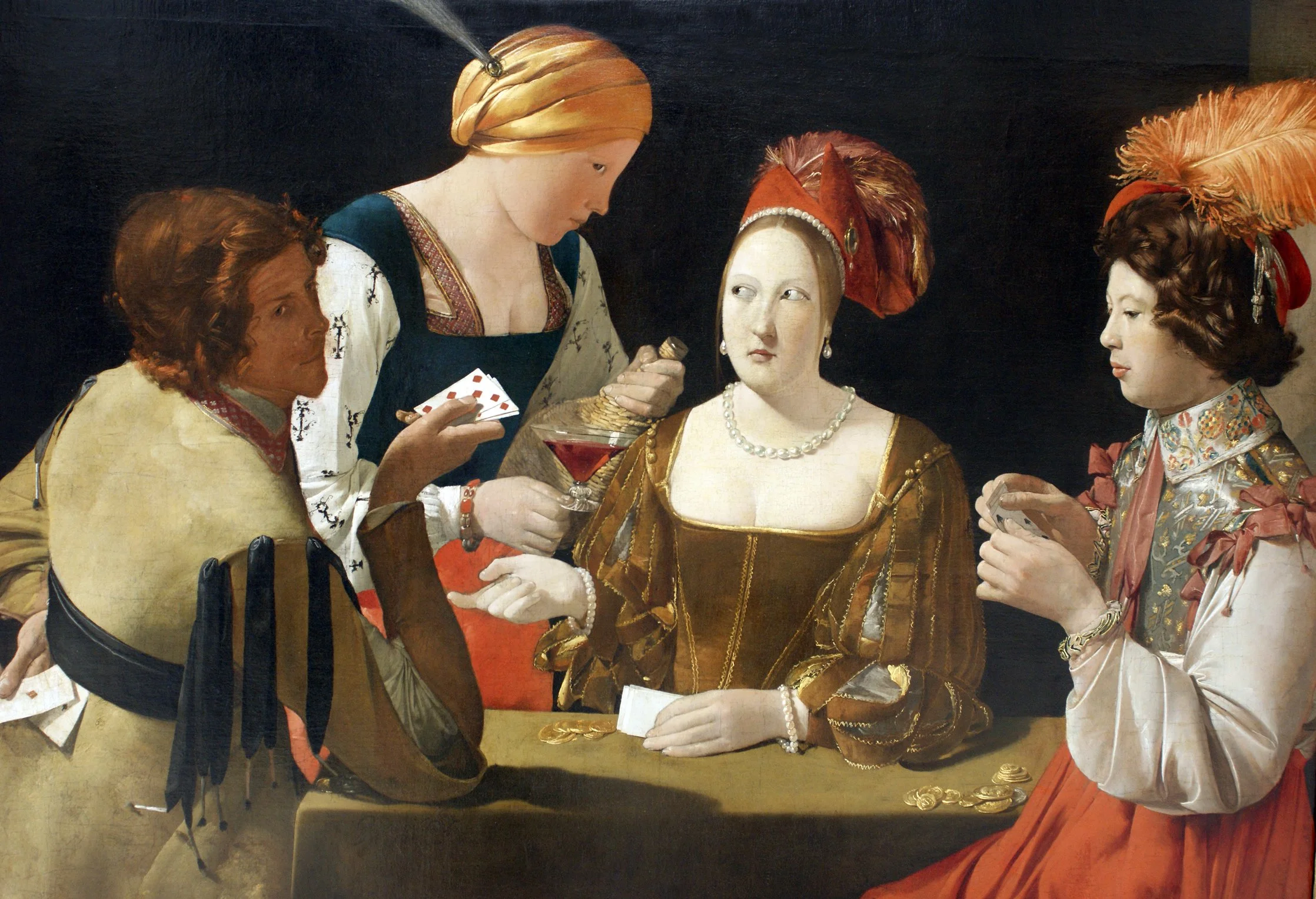
The Cardsharp with the Ace of Diamonds by Georges de La Tour, c. 1620–1640.
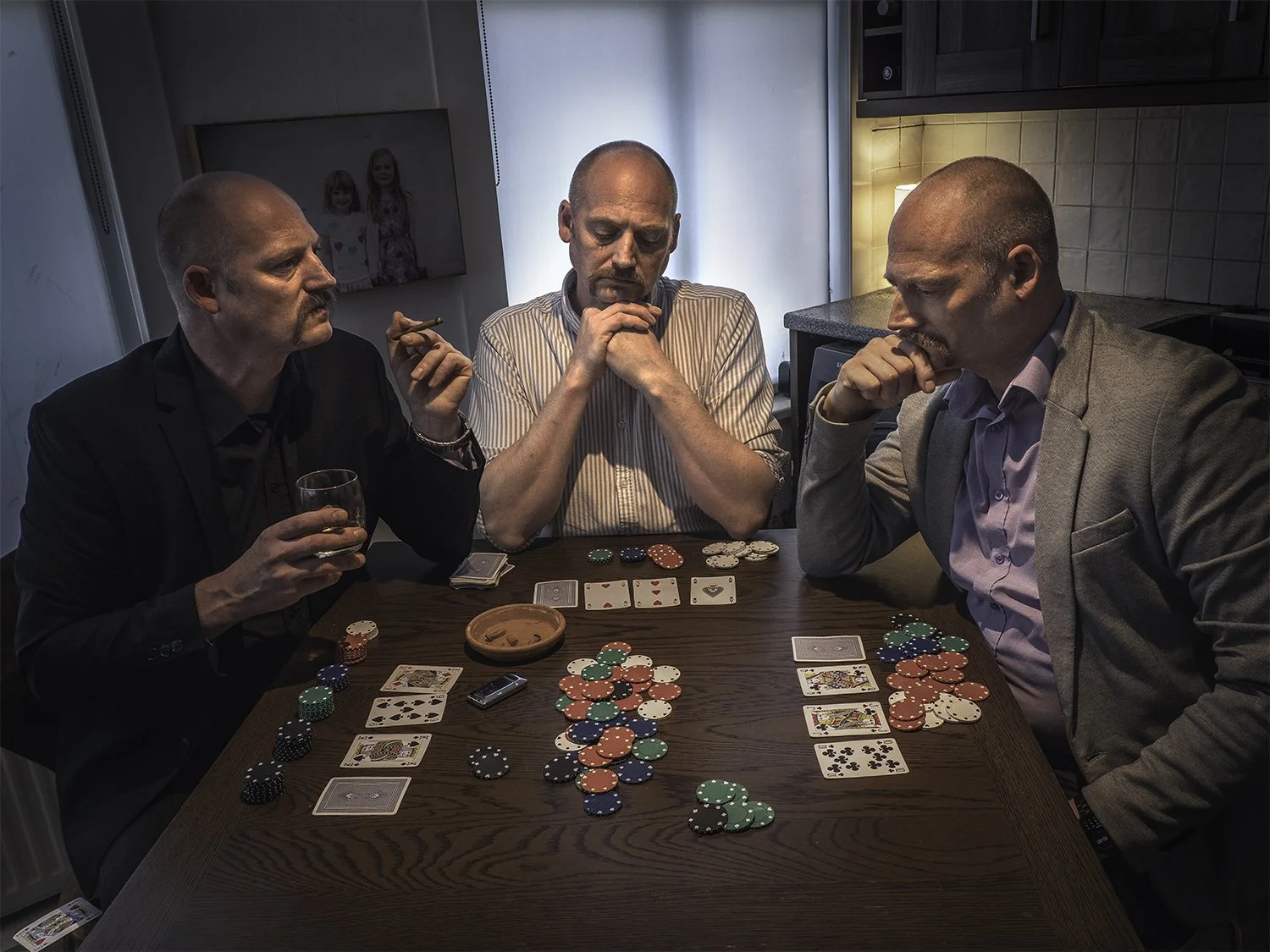
First variation — ultimately rejected due to the lack of eye-contact between characters.
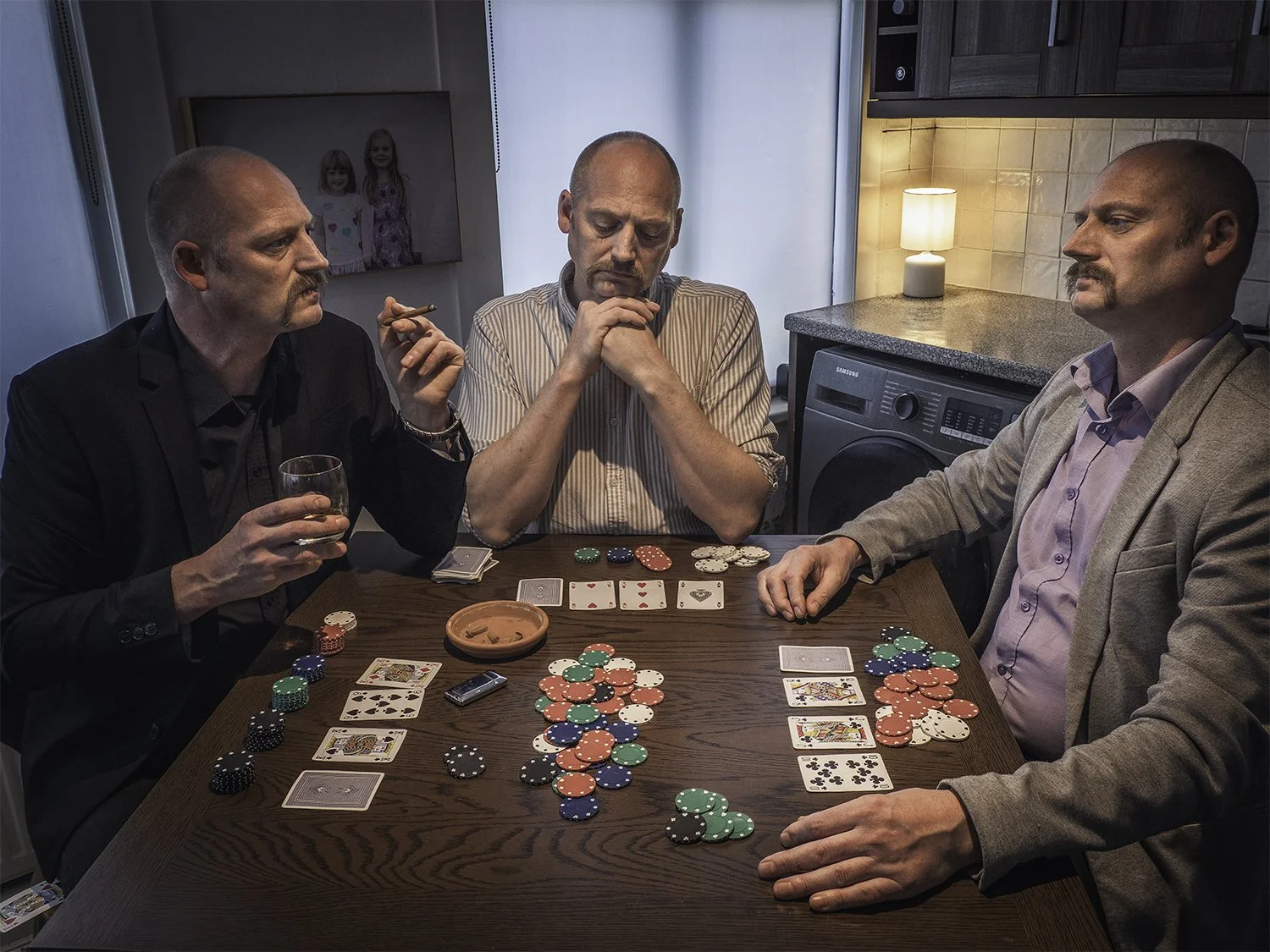
Second variation, but felt I’d lost some drama in making it brighter.
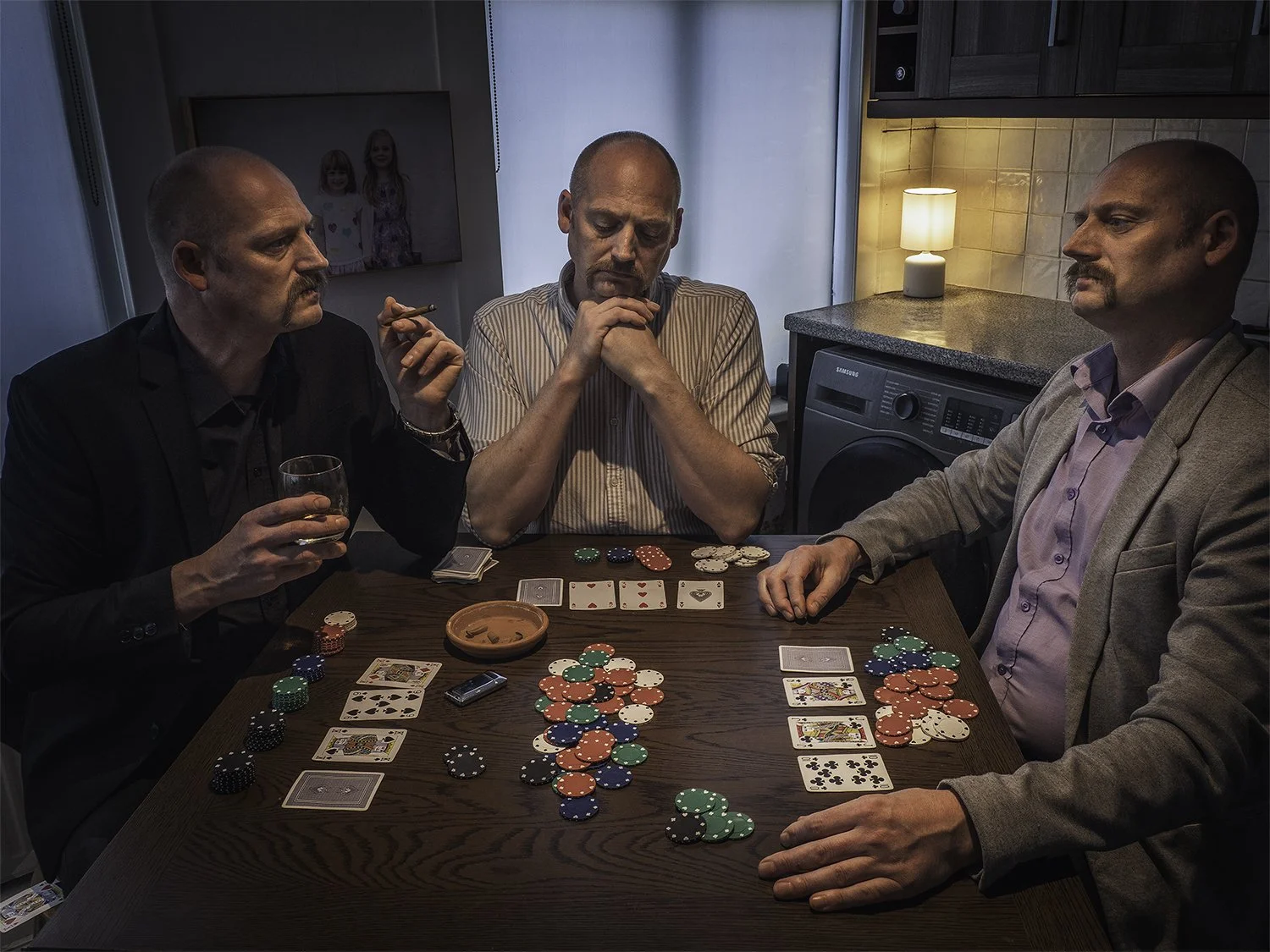
Final variation: Trinity III — Playing the old man’s loaded hand
In my image “The Father” sits stage left, he has had two Kings (Diamonds and Spades) and the Nine of Spades dealt to him and only each player knows the value of their own face-down “hole card”, but he also has a hidden card he can deploy to cheat with, another king —the King of Hearts, also known as the “Suicide King”. Three Kings could only be beaten by three or more Aces, or a Royal Flush, with only one more card to be dealt to each player. Stage right is “The Son” who has been dealt the potential makings of a Royal Flush, but achieving this would rely on his “hole card” and the last card dealt to him being the King of Clubs and the Ace of Clubs. “The Holy Spirit” in the background has only the Ace of Spades and the Two and Three of Hearts — What is his “Hole Card” the - Ace of Clubs, or the King of Clubs meaning “The Son” couldn’t win?Does “The Holy Spirit have another Ace with the possibility of being dealt another to maybe challenge “The Father”? The chips on the table tell us something too though. “The Father” has the most value in his by far with black being highest denomination at £100 green being next at £25, then blue at £10, red at £5 and white at £1. His chips are also neatly ordered as he is in control of his money. Also, we can see his last bet of two black chips, £200 in front of his cards - he has the highest visible hand so has to bet first. “The Son” is confident in his chances (maybe his hole card is that critical Ace or King of Clubs) as he has matched the bet with one £100, and four £25 chips. We await the bet of “The Holy Spirit”, and once betting for the round is complete, the dealing of the final fifth card. Can anyone beat the “loaded” hand of “The Father”?