Greener Grass
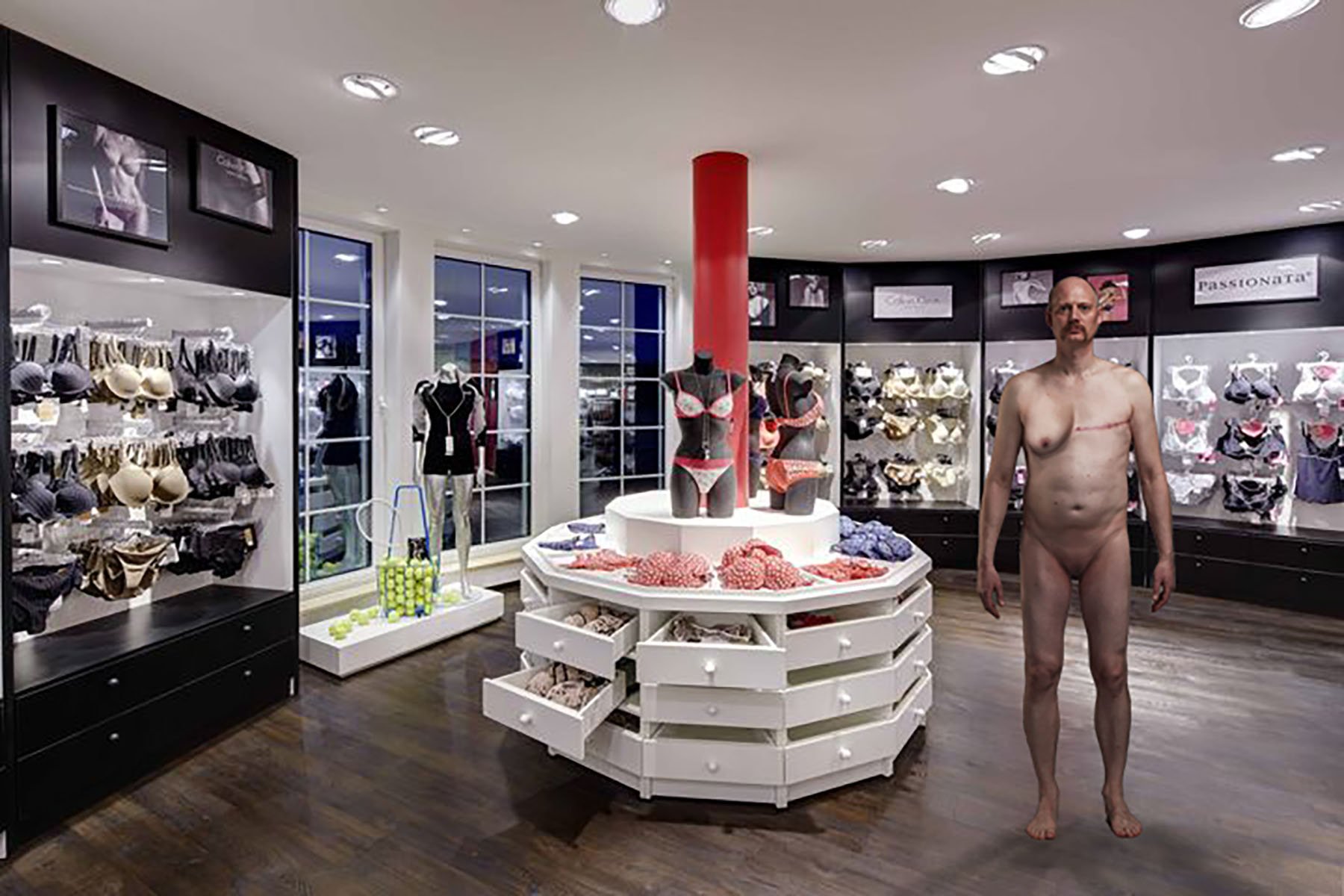
I had some difficult news at the weekend. While visiting, my next youngest sister (I have three) told me that my elder sister, whom I have always greatly admired, had been diagnosed with breast cancer. She had not told the family before. She has had treatment and thankfully a recent scan shows she is in remission. For as long as I can remember she has worked incredibly hard to achieve her goals, initially juggling post-graduate study with work, and in recent years her full-time academic career with being a mother to two young children. While her husband is a successful journalist and author, his income is less consistent and it has always seemed to me that she holds the family together, co-ordinating childcare and domestic duties as well as excelling in her demanding lecturing and academic work. I can’t help but wonder if the stress that I have observed her bearing has been a contributing factor. Having checked in with her and offering a shoulder to lean on, I was motivated to think that this subject matter might be something to explore while pursuing the Out of Place project. I had already been trying to find ways to explore the entanglement of biological sex, embodied experience and the socio-cultural concept of gender, and the topic of breast cancer seemed significant. It seemed to speak of the gendered nature of bodies and the way that breasts both signify maternity and femininity while also being highly sexualised.
And then there was another important trigger, completely unrelated but also powerful. I was relaxing with my partner and streaming some light entertainment in the shape of “Handmade - Britains Best Woodworker” (like Bake-Off, but with buzz-saws and bed-frames not bread-rolls and biscuits) from Channel 4. There was a very creative, talented and endearing trans-woman contestant called Misti who, in one of her personal disclosures to the audience made an association between getting her nails done and feeling feminine. My partner who is unable to have children but does menstruate and often has particularly severe periods (due to a sometimes debilitating auto-immune condition) had also had her smear test that day, said something along the lines of “having a manicure does not make you a woman”. This also made me think. While I have little first-hand knowledge of the trans experience, my partner is more familiar. One of her closest long-time friends is a gay man who also used to be a drag queen and she has spent a great deal of time socialising with him and his trans social group, from the straight drag-queens through to post-op transexuals. Therefore, while hers is by no means direct, lived experience of being trans, I certainly take notice of her views on the subject.
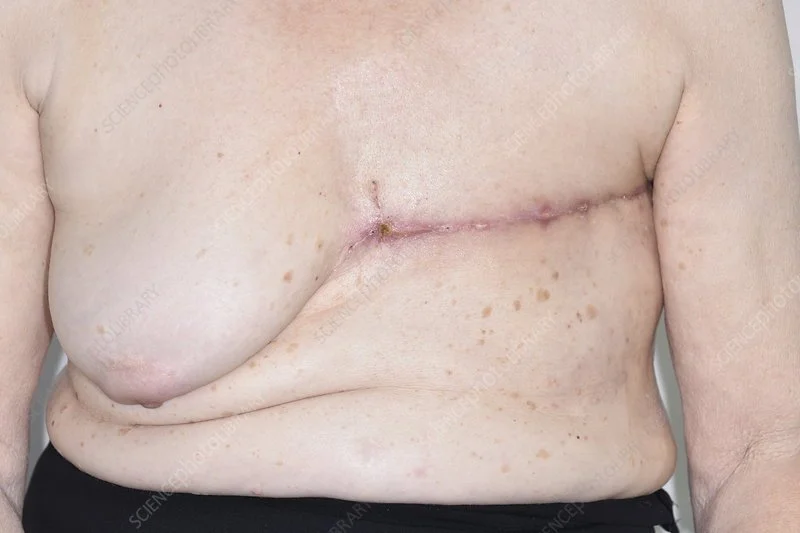
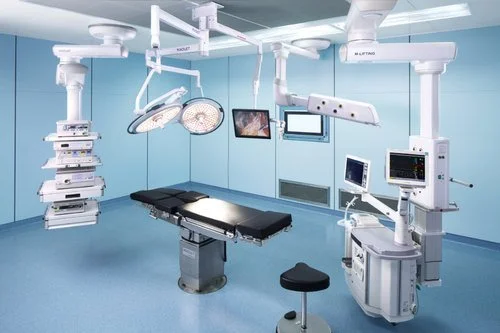
And so it was that the combination of these events caused me to think that making one of my ambiguous beings but with a breast removed and a mastectomy scar, might be a powerful statement about a gendered experience, rooted in the body but also socio-cultural that is uniquely female. Having created a draft bi-gendered being using a low-res “found” image of a mastectomy scar, I then had to consider what sort of location would be suitable to situate them in. I considered an operating theatre, but this seemed to speak of only the medical and health implications rather than the socio-cultural gender context. A “drag” club was another thought, but this seemed to target only a niche performance of femininity whereas I am more concerned with the broader but heavy burden of social norms. It was then that it occurred to me that women’s underwear and lingerie in particular, is one way in which “femininity” is culturally expressed and of course, with the direct relationship between bra’s and breasts, a lingerie retail environment seemed like an ideal location.
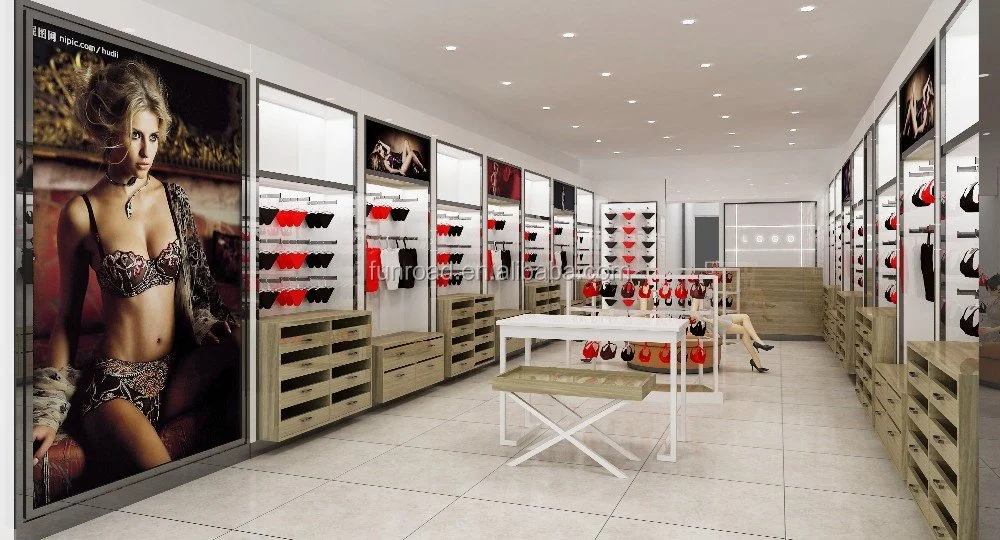
It could not be any women’s underwear shop though, I wanted specifically to find an image/location that represented the sexualised, emphasised femininity that seems to be the predominant depiction of femininity presented to us by mass media and advertising: youthful, slender, fragile and beautiful only within narrow parameters. The every-day, comfortable bra’s and pants and ordinary wobbly bodies would not provide the contrast I was seeking between the realities and fantasies of femininity/woman-ness.
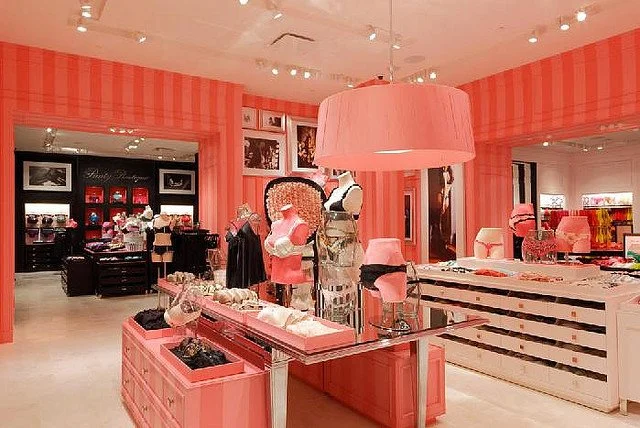
Again I had to rely on a low-res “found” image so the final composite image sketch is of poor quality, but I certainly think there may be mileage here for exploring the links or otherwise between embodied experience and our notions of gender. It has also occurred to me that menstrual blood and caesarean scars might also be ripe for exploration.
Using the same source images I had for other recent tests, the scarred being is again very static. Ultimately this may not be the optimum sort of pose should I reshoot this on location for a final piece, but this is something to consider further once I have decided whether or not to include this in the eventual creative output.